Graphic work: Done


Before:

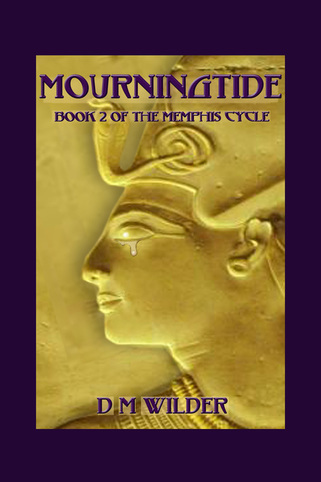
This had problems; the original was worse

Not a lot to complain of, except that the main character featured on the cover was a man, without a doubt, and the kohl around the eyes and the truly bizarre hair – even to those like me who are somewhat familiar with the society makes you doubt it.

I had wanted it to be moving, the tears in the eyes – the story arises from a bereavement – but while I liked the composition and the color, I had to admit to myself (at the very least) that this was wretched and needed to be adjusted.

I liked the colors and the composition, and, as with the other designs in the cycle, I liked using statuary (in this case a bas-relief) that had some connection with the characters.

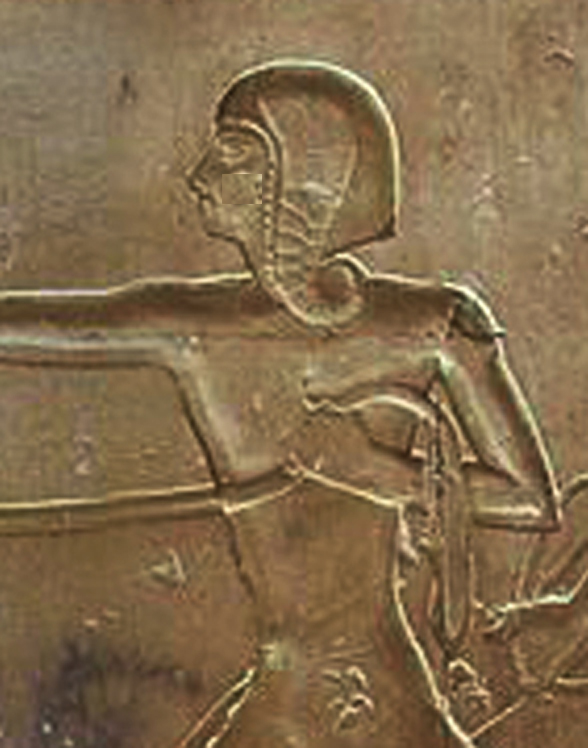
The hair was problematic, and there were several reasons why I was dissatisfied.


An improvement, but needs work…

Tonight I sat down, thought things through, and worked for severael hours.  I had an idea for a way to fix things.  Doing the hair differently, for starters.  

 After:


The final version

Better hair.  It looks better.  I may lift his chin a little, though he is mourning (hence the title…)

I adjusted it a little this morning and then the connection failed.  I’ll upload the ‘final’ version this evening.  I made the man larger on the page, and raised his chin, as I had intended.

…and here is the final version.  I also removed the hand from the frame, whihc reduced the ‘noise.

One more step taken.  *Sigh*.  I will miss this story.

September 6, 2015:
I am editing this to show the final cover.  I scrapped the cover image, which I realized was not up to par, and composed a different one completely:

Picture


Uppity Characters


Dorothy Sayers wrote an excellent and fascinating book with the title The Mind of the Maker.  It is actually a treatise on the theology of the Trinity – but since it is told from the focus of a writer, specifically, it is a wonderful read.  You can find  it HERE on Amazon.

She talks of the three parts to a work – the Idea behind the work, the Energy involved in creating the work, and the Power that arises from the work – the reaction that readers have to it, and the way it changes them.  My copy is hopelessly marked up.

One of the most enjoyable discussions (for me) is her talk about the nature of characters, and how they have to arise out of a plot and be firmly centered in the plot to have any reality.  She gives as an example a passage from Writing Aloud by J D Beresford in which he tells about his attempt to write a book based on a character that he dreamed up.  It was a shambles.  The minute he put this character into a story, other characters, arising from the story itself, and conceived of as being in a situation took over.  They were immensely more powerful and more compelling.

Interesting, I thought all those years ago.  Something to mull over and marvel at.

And then it happened in my writing.

Pharaoh’s Son takes its title for the literal translation of the Egyptian term for ‘Prince’.  It is ‘King’s Son’, or ‘Pharaoh’s Son’.  Since the book involves a number of princes, I thought it appropriate.

The main character is a son of Ramesses the Great, well-attested in history with a character that comes through clearly across the centuries.  Historically, he was a scholar and was credited with being the first archaeologist in history.  He served as High Priest of Ptah and Governor of Memphis, and was Crown Prince at the end of his life.  He fulfilled these roles with such distinction that he was remembered as a wise man for centuries after his death.

With these attributes, how can such a character help but be splendid?

Well, my would-be main character was overshadowed by his brother, the Crown Prince of Egypt, who stepped into the story as a quasi-villain, had a turnaround, and ended up stealing the show.  A character in a situation, he was far more powerful than his brother, far more interesting…

The original hero ended up holding his own, and we had two main characters.  It worked.

And it provided for me  a very good illustration of Beresford’s situation.

Six Weeks


I will be releasing Mourningtide in six weeks – April 30, to be precise.  I am posting the current cover, but I have a newer design that will be posted a little closer to release.

It has been an enjoyable story to write.  I am often sad when I finish a project like this.  I will be seeing a favorite character for the last time – he appears only as a memory in the next installment.  And at the end of the next one I will be saying good-bye to my favorite character, ever.
Here is the older cover: 

Sample chapters are HERE

Small Celebrations – Busyness (a guest post)


Good morning, good readers and bloggers.  Diana Wilder, being quite busy with the subject of this post (as you will see) has asked me to step in and post for her, explaining why she is unable personally to post this morning.  It is, of course, a pleasure for me to do so.  The gods know she has done enough for me over the years.
 

She is, as she so divertingly puts it, ‘up to her eyebrows in editing’, and as she is putting the final polish on a story involving His Majesty my father, and myself at a younger age, she is also impatiently looking forward to working on another story set some fifteen years later in which I, unfortunately, make something of an ass of myself.  But it features four of my sons, and that is always enjoyable.  And she describes me, privately, as a ‘bonny fighter, if  distressingly gullible’ – I  call it wishful thinking – ‘and a bit of a doofus as to strategy’.  History shows that I was a statesman, not a strategist.
 
She is also polishing an older story – set in Paris (in my time it was most likely a pile of mud upon which wretched barbarians squatted and squabbled) – with an eye to putting it out on Kindle without a great deal of fanfare.
 
All of this has her, as she says, ‘crazy busy’, but she is also delighted.  She informs me that only those who have gone through extensive dry spells can understand her delight and celebration at running mad in this way.  She will be visiting the other blogs on this ‘hop’ (such an undignified term!) as she can.
 
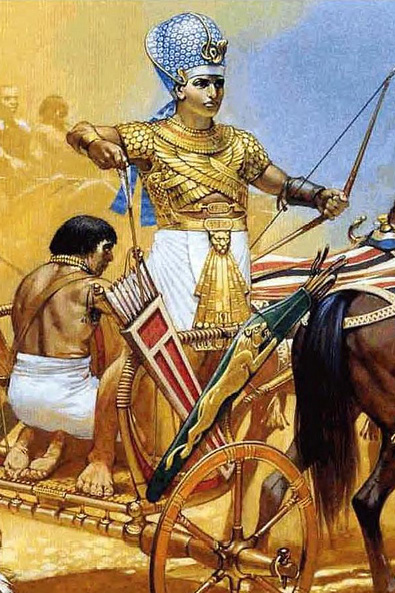
She makes her apologies, informs you all that she is raising a toast to all your celebrations, and knows that those of you who are running in the same lines of madness will understand and celebrate.  She also directs me to inform you that she is providing one and all with some ‘eye candy’ here.  I am blushing at the compliment.  Now if they could just find a better place to put the sheath for that dagger I would be a happy man.
 
Ramesses
by his own hand and seal.


http://www.linkytools.com/basic_linky_include.aspx?id=179014

Celebrations for March 8 – Small Pleasures


(folks, I don’t know why the date says March 7.  I posted this at 12:10am eastern US time on March 8…)

Years ago, when I was in college, my friends and I had one of those ‘what would you do if…’ discussions.  You know the sort of thing:


What would you do if you knew you were going to die tomorrow?

(I always wanted more information: how am I going to die? Am I supposed to know in ADVANCE?  So, the question is What would I do if I knew I were going to die tomorrow – apart from having a full systems blow of a freak-out episode?) 


Why don’t men dress like this any more?

If you could only go on one date this year, where would you go, and with whom?

(You mean no other date for the rest of the year?  So this would be my dream date?  Does sitting at home and eating rum raisin ice cream while playing footsie with Keanu Reeves – love the eyes – count?  No?  Whyever not?)


Quick! What did you eat for supper last night?
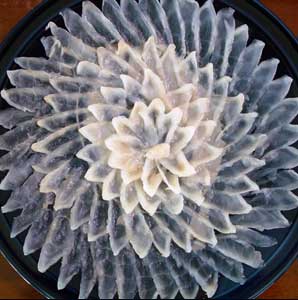
Fugu Sashini

(I hate that question!  I could have cooked a cordon bleu feast for friends using truffles, vintage Dom Perignon and fugu sashimi and I won’t remember after being put on the spot like that.) 

There is one question of those, however, that I always enjoy answering.  This is because, for me, it expresses the things I find perfectly luscious and celebration-worthy:
 

 – What would you buy if money was absolutely no object at all?

Can you smell the lavender?
You mean if I could afford ANYTHING?

– Yes.

Oh…  Oh, my.  Let’s see… 

1.  Every evening, when I got into bed, it would be to clean cotton sheets – and not too high a thread count – crisp is the word – that were freshly washed and hung out to dry in the sun – then ironed.  Yes, and three pillows on the bed.  AND a down comforter, crisp and white.
 
It’s the sun that gives the lovely scent…

2.  Clean, brand new clothes every day.  This would be excepting my jeans, which would be nicely broken in and spotlessly clean.
 

3.  Flowers in every room.  Fragrant ones.  Freesia, lavender, sweet old-fashioned roses. (and visit this blog, which provided this lovely bouquet: http://jeanniesgarden.blogspot.com/2010/10/october-bouquet.html) 
Ahhhhhh……

4.  A view of either mountains or ocean from every window.  Ideally, it would involve both.  I am not sure where that would be, but nevertheless – if I looked out the window it would be to see something splendid.  (I lived in a place, once, where every window opened to a view of a wall.  it was terrible.)

 
This is Barbados.  I’ll take Kauai.

5.  I would own a desk like that owned by Beauty in Robin McKinley’s book Beauty – the first iteration – when she first comes to The Beast’s castle.  Stocked with all sorts of paper and pens.
 

Who needs sugar with these?
6.  And, whatever the season, fresh, ripe raspberries whenever I wanted them.  Or fresh, wild strawberries, so small and sweet that sugar is not only unnecessary but laughable.


I’ll never be that wealthy, mind, but if you think it through, that list represents many of the things I find worth celebrating.  The crisp feel and smell of good paper, smooth, clean sheets, berries like the ones I picked at my uncle’s farm a lifetime ago.  The sweet, almost honey-like smell of my cat’s fur.


She does have sweet-smelling fur…

They are all worth celebrating.


http://www.linkytools.com/basic_linky_include.aspx?id=179014

Cheating


I try not to be negative.  Heaven knows, it’s difficult enough to do in the best of times.  Our lives are hard enough without having to deal with people lurking about just waiting to slam us.  I admit it is sometimes very satisfying to cut loose and give some nasty person what for, but the satisfaction in doing so is generally short-lived.  You hurt or offend someone, and there was no need.
But I can think of one or two times where it was merited and I enjoyed it.
One time that I recall, I was in Philadelphia, meeting some friends for tea at the Bellevue Hotel in their (Ethel) Barrymore room on the nineteenth floor:

The tea room is in the windowed, lit area on the front of the  photo.  A wonderful view!

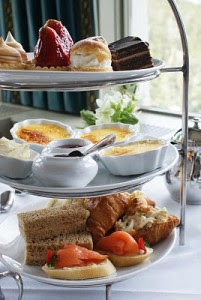
     That was always a wonderful time – high tea (your choice of tea) perfect little sandwiches of egg salad, or smoked salmon, or date nut bread and cream cheese… Devonshire cream, jam and scones… All in a lovely atmosphere.

        You entered from the ground floor, off the street.  There were a couple elevators that rattled their way to the 19th floor…  On the day in question, I boarded the elevator first, saw that others were coming, and put my finger on the ‘open door’ button.  People got on, and one gentleman was holding the door (he thought) by leaning against it.  I smiled at him and said, “I have the button!”  He smiled, nodded, and boarded the elevator.
Apparently, three of the passengers (one, actually) found my comment offensive.  From the first floor to the twelfth, she spoke loudly of ‘the LADY who has the BUTTON’.  Very loudly.
I thought, “She’s going to say something when she leaves the elevator,”  and I started thinking.
Now, a bon mot is really only ‘bon’ if you come up with it on the spur of the moment.  Practice may make perfect, but it disqualifies a retort from being a bon mot.  But back to the elevator.

The Ethel Barrymore Room at the Bellevue Hotel
We reached the seventeenth floor.  The door opened.  The two girlfriends exited the elevator.  The loud talker left after them, turned, raised her head, bared her teeth in a saccharine smile and said, “I’m so GLAD you hit the BUTTON!”
I smiled and said, with equal sweetness.  “My dear.  They can do SO much to help Premenstrual Syndrome – do, please, consult your gynecologist!”  And I ‘hit the button’ one last time.  Her saccharine smile shifted to a horrified snarl, punctuated by the sudden smirks of her friends as the doors closed.
Now, that was cheating.  I never – except that one time – refer to feminine (or, come to that, masculine) issues in my repartee.  It is cheating and demeaning.  But that chick deserved it.  I’d do it again in a heartbeat. 
It WAS good tea that afternoon, though.

Sweet Glory by Lisa Potocar


This link ( below) takes you to Amazon US.  Sweet Glory is also available on Amazon UK and through other booksellers.

Sweet Glory by Lisa Potocar

Years ago, while reading about the American Civil War, I came across an item that I found very interesting even for that heartbreaking, fascinating time.  I retired soldier, living on a government pension and in a home for retired veterans, had been discovered to be a woman rather than a man.  This soldier had fought during the war, had suffered all the privations that were experienced by soldiers in that time, and had been mustered out at the end with an honorable discharge. 

Naturally, the authorities were horrified and canceled the soldier’s pension.  A woman?  She was not a real soldier – she was an impostor!  I was not surprised to read of this.  It was the late 1800’s when ‘women’s work’ was officially circumscribed and severely limited, regardless of what women of that era had to do to survive.  I was thrilled to read that the ‘disgraced’ soldier’s comrades rose up and came to her defense  She WAS a soldier, they said.  She fought alongside them, suffered all they suffered, and had her share in securing their triumphs.  A woman?  Well, they hadn’t known.  One man said that that certainly explained the soldier’s modesty on the subject of going to the ‘sinks’ -a word for latrine.  The pension was reinstated, as was her war credit.   

This was not an isolated incident.  Something like this happened more than once.  And not just with women serving as soldiers.  Anyone with imagination starts wondering Who would do this?  How?  What hindrances would they face?  What temptations?  And how would they feel.
 
Sweet Glory tells the story of one of these soldiers. 

Jana Brady, from upstate New York, is an accomplished horsewoman, experienced with treating the ailments of humans and animals alike.  Sweet Glory follows her experiences s she joins a Cavalry unit – will she be able to get away and sign up in time? – learns about soldiering, becomes ‘one of the boys’ and finds a way, when it appears that her service must be at an end, to continue to serve. 

I don’t need to outline the plot of Sweet Glory.  The narrative draws you in, and you follow it.  I don’t mind saying that there is a twist toward the end that startled me and made me think, ‘How on earth will she get out of this?’  You’ll have to read Sweet Glory to find out what I mean. 

Lisa Potocar writes well, catching conversations in an authentic voice from that mid-Victorian era.  Her characters have human emotions and conflicts – one scene shows the two sides in a post-battle truce caring for the wounded.  It contains a very touching scene that had me choked up.  A description of a cavalry clash, with fighting in a ditch, was deftly handled, the emotions of the combatants believable and realistic. 

Sweet Glory is not a long book.  It tells the story of Jana’s service with the army – how it came about, how it progressed, and how it ended – and what it did to her.  Jana is a very ‘together’ young woman of intelligence and resolution.  The story follows her timeline, and while it could have paused to dawdle over details of day to day existence, that was not necessary to the intent of the novel, which shows how a woman can engage in a war and emerge from it with her feminine abilities and characteristics intact and deepened by the experience.  Jana uses her abilities and experience to cope ably with all that is involved in war. 

Physically speaking, Sweet Glory is a satisfying book.  And it is pretty.  The cover is beautifully conceived – note the top of the cover with a view of a lady’s slippered foot descending a step – and below it a scene from a battle – the woman stepping into war.  The typeface used is reminiscent of that you might find in a novel of that period. 

I have no hesitation recommending this book for just about any age.  I would have loved it if I had encountered it in when I was in elementary school.  I graduated from college a long time ago and I enjoyed it.  YA readers would enjoy it, too.  There is a love story in it, but I don’t classify this as a romance novel, though Jana’s emotions are well handled.  This is a reread, and I will be loaning it to my niece, aged fourteen, when I see her next. 

I was given a copy of Sweet Glory by the author as a thank you for some assistance with electronic media – blogs, postings and the like.  It was a gift.  I was not asked to review it, nor was it implied that I was expected to.  I read it because the subject interested me, and I am writing this review to reflect my impressions. 

This is, for me, one that I will reread.  Sweet Glory has won awards.  They were well-deserved.  Well done, Ms. Potocar.

Celebrating Sesame Seeds


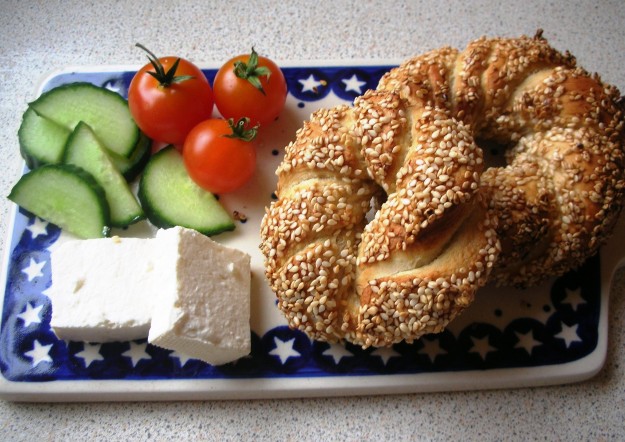
Today I’m celebrating something very small. Sesame seeds. I love the things. I’m always happy to encounter them, whether in ‘benne candy’ (those oblong rectangles of solidified honey full of sesame seeds that I always try to suck on and end up crunching), sesame chicken or hamburger rolls. I think it’s part of the human condition to chase sesame seeds across our plates, lick our fingers, catch the seeds, and bring them to our mouths.

This is a scene from a story I’m working on. It takes place in Egypt, God save the mark, and the two people are sitting in a plain, dockside tavern and discussing something very serious over a lunch of bread and, perhaps, some fish:

     “There is that.” Intef reached for the jar of beer. “I can send troops over tomorrow, but it will be in a rush.”
     Seti frowned and sat back, absently chasing sesame seeds with a fingertip.  “That might be a good thing,” he said after he licked the seeds off. “As soon as it can be arranged at any rate. Space is limited there – best to set up an encampment.”

     “That may take some time,’ Intef said.
     “That’s what I am afraid of.” He looked for more seeds and then shrugged. “And that is why I am uneasy.” He hooked the gold pendant from beneath his tunic, slipped it over his head, took the ring from the cord and handed it to Intef. “If I need the forces at once I will send to you. This ring is the token I will use. It does not matter who carries it: the request will be coming straight from me.”

They could easily be sitting in McDonald’s chasing sesame seeds across their plates.

There is not a lot that sesame can’t improve in any form. (Toasted) sesame oil adds a lot of flavor, sprinkle a handful in a dish and it adds looks and taste:

I’m going to have a toasted sesame bagel for breakfast, and I’m going to chase all the seeds.

http://www.linkytools.com/basic_linky_include.aspx?id=179014

Cooking Off the Cuff – Chicken Al’Italia


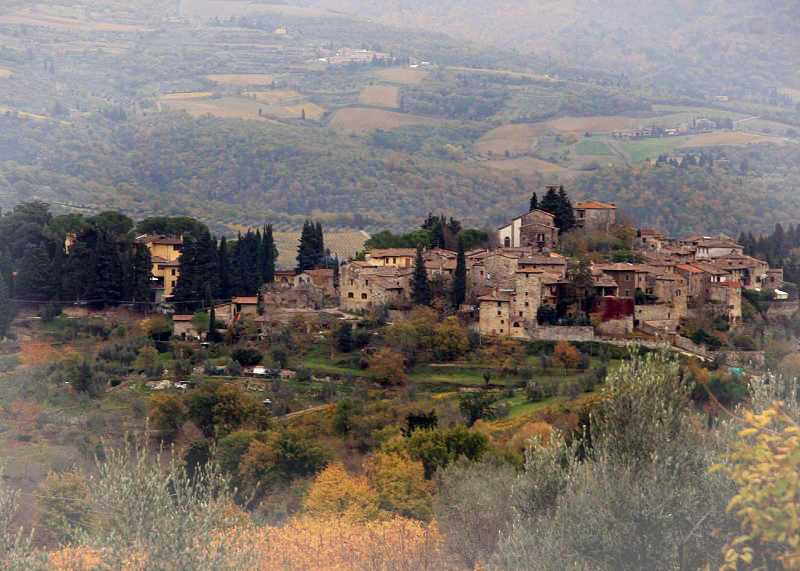
Escape to Tuscany in Winter?  Yes!

We all need comfort food, especially in the dull days of February (August, if you live in the antipodes).  It comes in various forms.  For me, rice pudding with raisins fits the bill very nicely.  Hot tea with milk.  Homemade cookies.  Roast chicken…

My sister, a very creative cook, came up with the perfect dish for winter.  I was visiting her and she came out with a bowl holding a medium-sized helping of Angel hair pasta.  She had ladled over that a rich red sauce containing chunks of chicken with capers and bocconcini, the chicken having been browned, and all of it (but the pasta) baked in a medium oven.

Of course I had to have the recipe, and she gave it to me.  Sort of.  She had just thrown things together as seemed right.  It was.  She’s good at such things.

I decided I wanted some of that tonight, so I assembled the ingredients, got the cookware out, turned on the oven, and got to work.  And then I thought ‘Why not share?’  So I am.  Here is the recipe for the newly named Pollo Al’Italia:

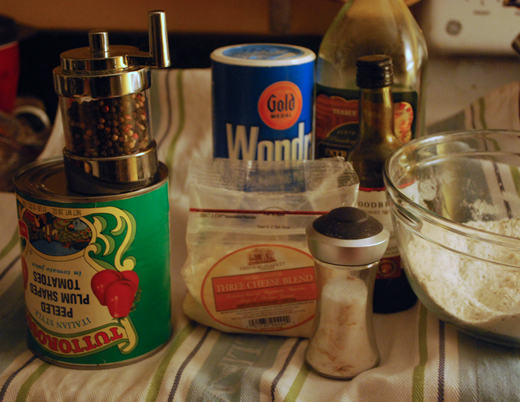
Naturally, you need your ingredients.  Since it’s ‘Pollo’, you need chicken.  I suppose you could use chicken pieces with skin, but I use chicken breast, cut into chunks.  That’s the hard part.  The rest is easy.

You assemble what you need:

Olive oil, the stronger the better.  Wondra flour (or any flour that’s a little grainy).  You need Italian herbs (basil, oregano and, sometimes rosemary).  Ground Parmesan or Romano cheese, capers (I prefer the larger ones.  Large or small they brighten things), good canned tomatoes, Fresh mozzarella, red wine.  Garlic. In other words, the usual suspects.  Don’t forget salt and pepper.

You’ll need a deep pan for sauteing, one that will go gracefully into the oven.  A smaller bowl for the seasoned flour, a pot for pasta water, a sharp knife with a respectable blade to deal with the chicken.   Pot holders.

Turn the oven on to 375.  Cut any ickies out of the chicken (those sinews that always like to show up in my chicken), trim the chicken, and throw any pieces you don’t plan to use into a pot of water.  Put it on to simmer.  Put enough olive oil in your saute pan to cover the bottom and turn the heat to medium.

Mix a cup of flour (do get Wondra; it’s best for this purpose) with 1/4 cup finely grated cheese.  Add sat, pepper, Italian herbs and garlic and mix well.  You can add some red pepper flakes.  To release the flavor, rub it between your palms.  Now toss the chunked chicken into the seasoned flour, coating it well.  Shake off the excess.  Put the bowl of seasoned flour somewhere that your biggest cooking fans (the dog and the cats) wont be likely to encounter it.

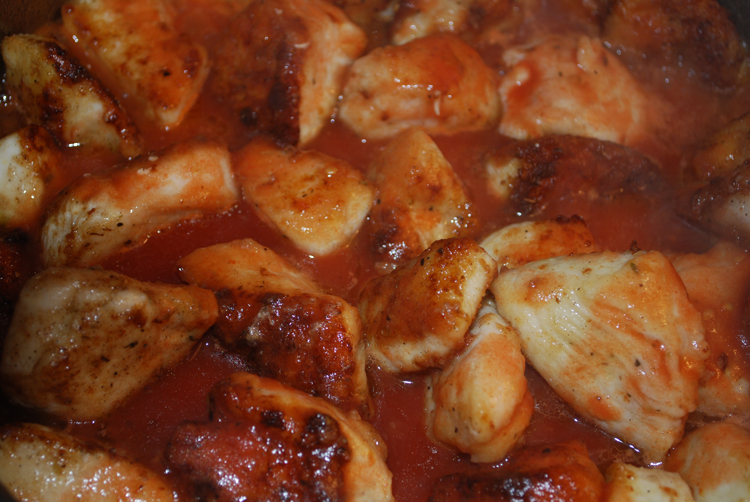
Put the chicken in the pan (enjoy the sound of sizzling) and brown it on all sides.  I tend to be a little fussy about turning things,  Browning is good, and the more you brown your meat, within reason, the better it will taste.  Don’t forget to turn the chicken so it browns evenly.  This seals in the juices, makes a nice crust, and allows you to turn to the various salivating humans and say, “It’ll be done when I’m good and ready!

Now is the time to get out the tomatoes – this is not the time to buy the cheapest in the store.  Open the can and pour the juice into the pan.  Then, using a stick blender, slightly blend the tomatoes and then pour in the wine – about half a cup. I prefer to use a cabernet or a zinfandel.  They are a little more full-bodied than a Merlot.  I like Merlots. They are charming, easygoing wines, and it’s hard to find one that is bad, but for this application they lack oomph. 
Now pour the wine/tomato mixture over the chicken and dot the whole with boccocini. If you can’t find that, fresh mozzarella diced into larger chunks does just fine. It looks pretty good right now, but waiting never goes amiss. Into the oven it goes – 375 degrees for half an hour. This gives you a chance to clean the cooking area, cut up the ooky chicken and simmer it for the pets. You can snatch a glass of wine – any of that Zin or Cabernet left. Then you rememer the pasta and hurry off to put water on for it.  The pasta cooks for five minutes (you ARE using angel hair right?
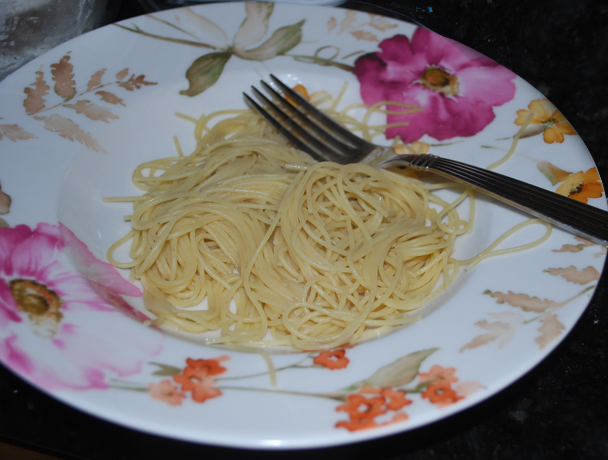
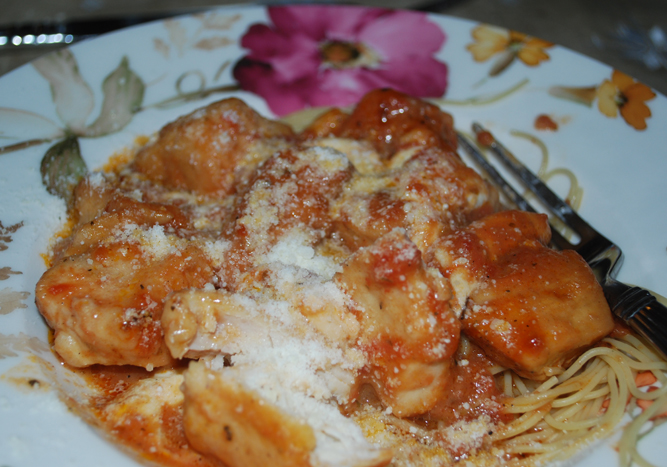
Dish up the pasta – not too much, and don’t forget to set some aside to eat with butter (not the fake stuff) garlic and cheese).  That taken care of,  you take the chicken out of the oven, smell the warm scents of cheese and tomato and wine all together with garlic, oregano, basil…  The balls of bocconcini have sunk into the sauce, but they are there.  The chicken is tender, not dry, all the flavors are blended. All you need to do is wait until the next day, giving it a chance to sit, to mingle, to mellow as tomato-based dishes always do.  Tell the family, the dog, the cats (there’s nothing here they can’t eat unless you put some onion in) that they need to wait a day for everything to mellow.

Who am I kidding?  Dish it up, dig in and enjoy it.  And thank my sister, who invented the recipe!

Small Celebrations – A Wonderful Invention


We’re celebrating the small things weekly. This week I’m celebrating a wonderful invention that has saved the world a lot of pain. What is is? Well, let’s not get ahead of ourselves.

We have, here, a photo of tea cups, as the Chinese used them: They certainly are pretty – I love the color, but in one way you could say that they’re lacking. Still, this is the shape of teacups over the course of millennia. Even in eighteenth century England, when tea really took off. Here’s a depiction, by Hogarth, of a family in which two members are enjoying a cuppa. Looks just a little awkward, doesn’t it?
It is awkward. I’ve burned my fingers, slopped hot beverages on my lap, scowled at a high level of nearly boiling water and shaken my head.
Awkwardness doesn’t count for much if you are dealing with a fad, which Tea has always been, not that I’m complaining. I drink a cup or two in the morning. Strong, hot, laced with milk. I love the stuff.

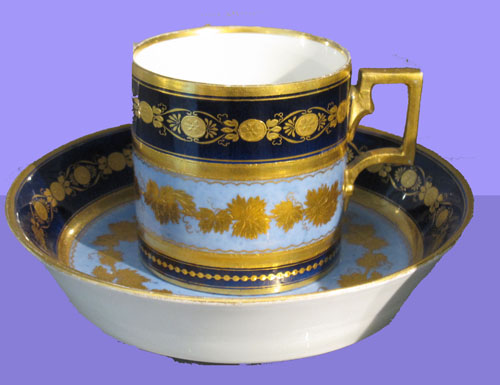
But, you see, I am the beneficiary – along with most tea and coffee and hot beverage drinkers – of an invention that revolutionized the drinking of hot things. The Cup Handle. the invention that is this week’s small wonder. Here is a sample in all its European glory (though I did see samples produced by the Chinese):

Look at it. It’s elegant, balanced, decorative – and practical. You won’t be putting those burned fingers in your mouth and wincing. I never realized how wonderful this was until I thought about it (and went to a top-notch Vietnamese restaurant that had the old style cups, ending up with my fingers in my mouth, eyeing the elegant white porcelain cups with raised eyebrows). Yes, they’re a great invention, and they are this week’s small triumph.

http://www.linkytools.com/basic_linky_include.aspx?id=179014