E is for Eres Tu


E is for Eres Tu

                                                     
Eres Tu (‘You are’) was sung by the Spanish group Mocedades, who performed it for the first time in 1973.   I did not hear it, myself until years later.  I first heard the melody for this on a Lawrence Welk show, of all places.  A beautiful singer from Mexico, often featured on the show, sang the words, a few of which I caught.  I loved the flow of the melody, the soaring climax, descending again, warmly, to a smile.

I took classes in Spanish when I was very young.  It is a Romance language, and I can understand it if I see it written, but the words of a song generally escape me.  …something about the night… The rest of the words escaped me.  I made up my own to fit the melody, sang them when I felt like it, and stopped everything to listen when the song came on the air, as it still does from time to time.

And then along came the internet, and I adapted.  Last year it occurred to me that I could maybe look up the song, learn what, exactly, it was about, and stop singing phonetic gibberish.  As often happens when a smash hit song is translated into another language, the words didn’t make a lot of sense.  It was obviously an issue with translation, not with the words themselves – the sense was lovely, a paean to all that a loved one was to the singer.

Last week, checking again, I found a very beautiful, flowing translation of the lyrics, which I share here with full credit to the translator:

So like a promise, it is you, it is you
So like a morning in the summer
The warmth of a smile, it is you, it is you
For me, for me, it is you


My hope and my yearning, it is you, it is you
So like a cool rain in my warm hands
So like a soft wind, it is you, it is you
For me, for me, it is you


The rhyme in my poem, it is you, it is you
Like a guitar sounds in the nighttime
The light on my horizon, it is you, it is you
For me, for me, it is you

I found a link on YouTube to one of the original performances.  It is HERE .  I like it even more.

I also found a link to a fairly recent performance of that song, which is something of a classic in Spain, deservedly.  Mocedades has worn well.
D is for Diamonds and Rust


I remember when this song first came out.  That beautiful, lyrical voice – framing words that made me blink and then smile:

Well I’ll be damned
Here comes your ghost again
But that’s not unusual
It’s just that the moon is full
And you happened to call
And here I sit
Hand on the telephone
Hearing a voice I’d known
A couple of light years ago
Heading straight for a fall


The story behind the song was  an interesting one.  Someone she had had a relationship with – conjecture abounded.  Some said it was Bob Dylan.  Dylan, himself, seemed to think so, based on Baez’ memoirs.  Does it matter?  A ghost from the past comes to visit, bringing memories:

Now I see you standing
With brown leaves falling around
And snow in your hair
Now you’re smiling out the window
Of that crummy hotel
Over Washington Square
Our breath comes out white clouds
Mingles and hangs in the air
Speaking strictly for me
We both could have died then and there

And the emotions are there, with an openness to memories and, perhaps, another touch:

…It’s all come back too clearly.
Yes, I loved you dearly.
And if you’re offering me Diamonds and Rust
I’ve already paid.

– – – – – –
WATCH A VIDEO HERE  (Joan was not into music videos…this is a live recording)

© 1975 Chandos Music (ASCAP)

    © 1975 Chandos Music (ASCAP)

C is for…


   There are three songs that seem to tie together.  Let’s look into them:

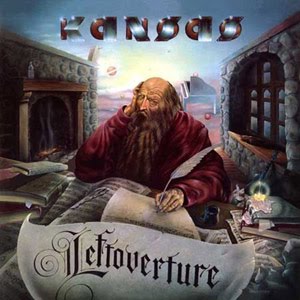
 Carry On My Wayward Son was featured in Kansas’ Leftoverture album.  It was also featured in the movie ‘Heroes’ with Henry Winkler and a very young Harrison Ford (and Sally Fields).  It has some themes that seem to mean something to me:
 

Carry on my wayward son
There’ll be peace when you are done
Lay your weary head to rest
Don’t you cry no more

Masquerading as a man with a reason
My charade is the event of the season
And if I claim to be a wise man, well
It surely means that I don’t know

On a stormy sea of moving emotion
Tossed about, I’m like a ship on the ocean
I set a course for winds of fortune
But I hear the voices say…


Hm.  We are all just a little frenetic in our younger years, but things seem to mellow when we come to ourselves and buckle down.  We even grin, a little:
Turning back the pages to the times I love best I wonder if she’ll ever do the same
Now the thing that I call living is just being satisfied
With knowing I got no one left to blame

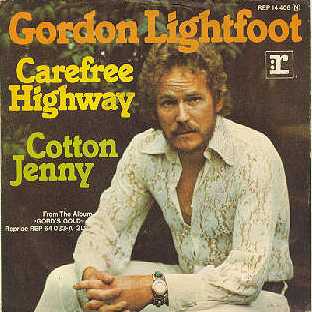
Carefree highway, I got to see you my old flame

Carefree highway, you seen better days
The morning after blues from my head down to my shoes
Carefree highway, let me slip away, slip away on you


But time passes,  dreams are within reach, you touch the past and reach for the future, and things are now, as they always were, possible:


Daddy’s got a radio
He won it thirty years ago
He said ‘Son I just know we’re gonna hear you
singing on it someday!’


I Made it up to Music Row
Lordy don’t the wheels turn slow
But I wouldn’t Trade a minute
I wouldn’t have it any other way 
Just show me to the Stage


I’m chasin’ the neon rainbow, Livin’ that honky-tonk dream
‘Cause all I’ve ever wanted Is to pick this guitar and sing
Just trying to be somebody Just wanna be heard and seen
Chasin’ that neon rainbow Livin’ that honky-tonk dream

– – – – – –
Carry On My Wayward Son:
Songwriter(s): Kerry Livgren
Copyright: Kirshner Don Music


Carefree Highway, ©1973 by Gordon Lightfoot


Chasin’ That Neon Rainbow lyrics © EMI Music Publishing, Warner/Chappell Music, Inc.


The Begonia Bribe… for the B Day!


The Begonia Bribe:  2ndin the Garden Society Cozy Mystery series by Alyse Carlson (aka: Hart Johnson) 


Roanoke, Virginia, is home to some of the country’s most exquisite gardens, and it’s Camellia Harris’s job to promote them. But when a pint-sized beauty contest comes to town, someone decides to deliver a final judgment …

A beauty pageant for little girls—the Little Miss Begonia Pageant—has decided to hold their event in a Roanoke park. Camellia is called in to help deal with the botanical details, the cute contestants, and their catty mothers. She soon realizes that the drama onstage is nothing compared to the judges row. There’s jealousy, betrayal, and a love triangle involving local newsman—and known lothario—Telly Stevens. And a mysterious saboteur is trying to stop the pageant from happening at all.

But the drama turns deadly when Stevens is found dead, poisoned by some sort of plant. With a full flowerbed of potential suspects, Cam needs to dig through the evidence to uproot a killer with a deadly green thumb.


Pre-order on:AmazonBarnes and Noble Find Hart/Alyse at:Confessions of a Watery TartFacebook Author Page or ProfileTwitter

B – Back in the High Life Again


This song by Steve Winwood somehow speaks to dreams I once had and renounced because of initial disappointments and the pure hard work involved in them.  Like the others I speak of in this challenge, it’s one of those songs that make me stop what I’m doing and listen. 

I tend to be a visual sort, and as a storyteller I find that songs turn themselves into stories.    I can see someone who turned away and rejected  everything confident that he could do it all by himself and not ‘pay his dues’, coming to himself thinking that he could do it, and this time he would do it right, step back into the world he belonged in.  It might take courage…

But when you’re born to run
It’s so hard to just slow down
So don’t be surprised to see me
Back in that bright part of town

But will he be welcomed back?  does he have a chance? Is it worth the risk to try again? To straighten his shoulders, take a deep breath and move forward?  Does he dare?  Would I dare?  You have to try –

You used to be the best
To make life be life to me
And I hope that you’re still out there
And you’re like you used to be

Is it worth the risk? IS it? IS IT?  You take a deep breath, open the door, look at the faces turned toward you, step forward, hopes high –

We’ll be back in the high life again
All the eyes that watched us once
Will smile and take us in


It is.

 Songwriter(s): Steve Winwood, Will Jennings
Copyright: F.s. Music Ltd., Blue Sky Rider Songs

A – for…


AFRICA – by Toto

You hear the thudding of soft drums, an almost tinkling counterpoint, and then the words come softly:

I hear the drums echoing tonight…

But she hears only whispers of some quiet conversations…

The beat continues and the words unwind their images –

…Sure as Kilimanjaro rises like Olympus above the Serengeti

..and the drums continue.  Africa…

I think, somehow, we all have an affinity for The Skull-Shaped Continent.  Did life come from there?  I don’t know, but we all have roots in its soil, we all have images in our minds of bright clothing, of mountains or plains, deserts – all the fabulous wealth of human civilization, some of them existing in our knowledge only as memories.  Africa. 

And every time I hear Toto’s song I stop and hear the drums…

Africa lyrics © Sony/ATV Music Publishing LLC

Preliminaries for April…


Thinking…
I saw the A to Z blogfest and, in a moment of recklessness – the kind that leads to commitments that we end up regretting in direct proportion of their grandiosity – signed up.  The regret lasted for a week or two.  What on earth was I going to write about?  Just random posts?  What do I do with ‘Q’?  And then it hit me as I was singing along to one of my very favorite songs – which I am making the first in this blog series. 

Songs somehow seem to define me or explain me.  I come from a musical family, and it is to my everlasting regret that my college – the University of North Carolina – rejected my offer to play the kazoo in their orchestra.  

So, we are going to talk about ‘those songs’.  The ones you really, really love, that you find yourself singing over and over, humming.  They might not seem to have a lot in common, but there is something that ties them together.  What is it?  Well, maybe we will find out.
 
See you tomorrow…

The Ballad of Sherlock Holmes


The nice thing about writing a blog that doesn’t get a lot of traffic is that the blogger can put up all sorts of nonsense without fear of reprisals.

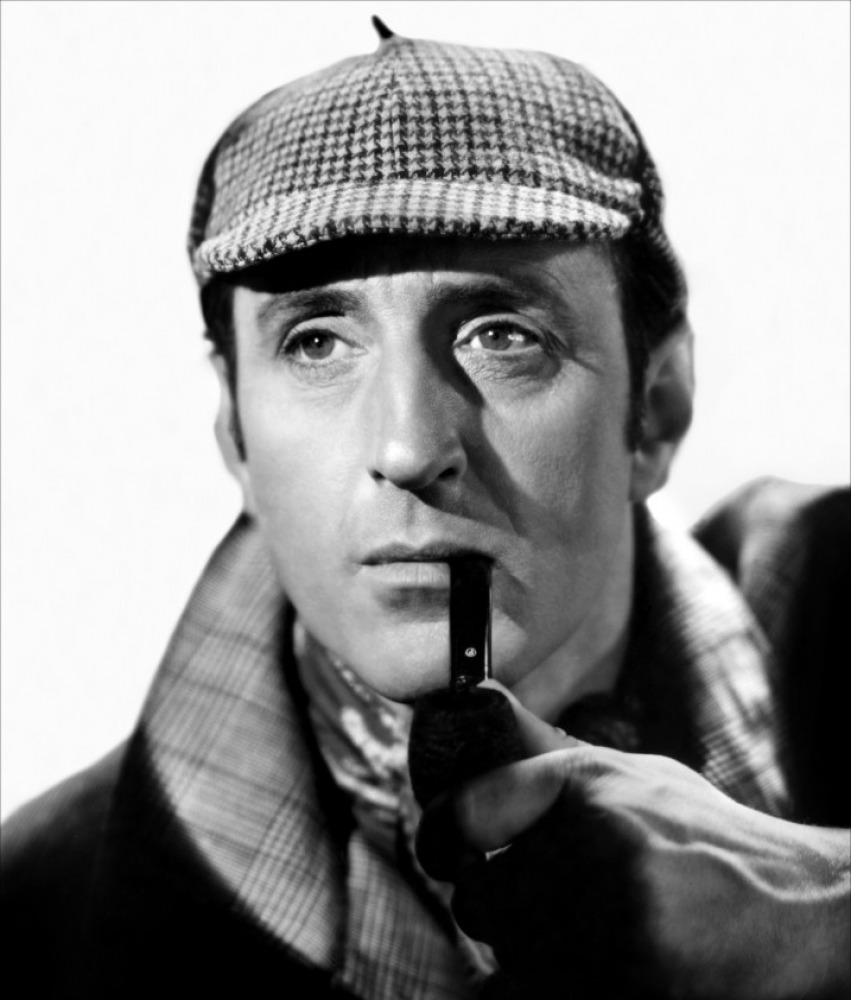
With that mindset, and a bow to Conan Doyle, I herewith offer:

The Ballad of Sherlock Holmes

Sherlock Holmes was canny
And his observations many
And he had a nose for sniffing out the facts.

Not until some nasty villain
Had surrendered, meek and willing,
Could our great detective sit down and relax.

But the villains, they were many
And poor Sherlock wasn’t plenty
Even if we counted Watson – which we won’t.

And it seemed that every morning
Brought a different case a-borning
Till The Great Detective screamed and shouted “Don’t!”

Doctor Watson was a-staring
As poor Sherlock started swearing
And he wrote down in his notebook ‘Mania!’

Sherlock saw him and he snorted,
“My career will be aborted!
Friend, I need some rest or I’ll go ‘Zani-a!'”

Watson beamed with inspiration
And he said, with hesitation,
“Holmes, you ought to go and visit Baskerville! –

Why, the prospect isn’t daunting,
And he has some lovely hunting!”
“Capital, dear Watson – yes, I think I will!”

But Lord Baskerville had trouble
And the trouble seemed to double
In the eerie shape of one gigantic hound.

And poor Holmes – he started crying
As he saw his ‘rest trip’ dying,
And he wished he hadn’t thought to come around.

There’s a moral to this story:
If you do not want to worry
You can take as good solution this alone:

If customers with their hist’ries
Want to tell you all their myst’ries –
You can tell them that you simply are not Holmes!

Graphic work: Done


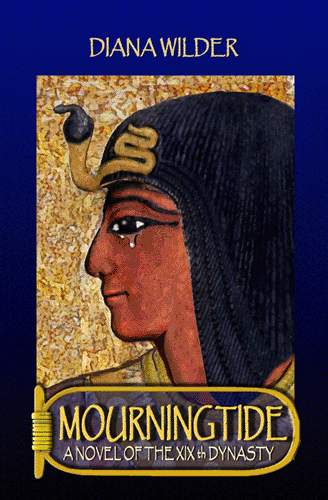
Before:

This had problems; the original was worse

Not a lot to complain of, except that the main character featured on the cover was a man, without a doubt, and the kohl around the eyes and the truly bizarre hair – even to those like me who are somewhat familiar with the society makes you doubt it.

I had wanted it to be moving, the tears in the eyes – the story arises from a bereavement – but while I liked the composition and the color, I had to admit to myself (at the very least) that this was wretched and needed to be adjusted.

I liked the colors and the composition, and, as with the other designs in the cycle, I liked using statuary (in this case a bas-relief) that had some connection with the characters.

The hair was problematic, and there were several reasons why I was dissatisfied.


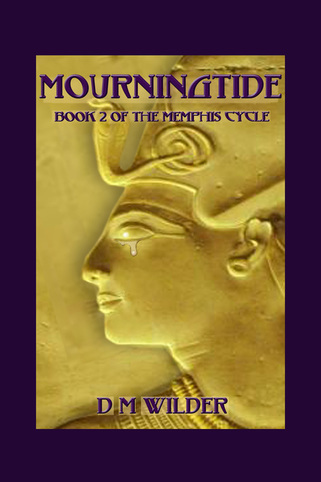
An improvement, but needs work…

Tonight I sat down, thought things through, and worked for severael hours.  I had an idea for a way to fix things.  Doing the hair differently, for starters.  

 After:


The final version

Better hair.  It looks better.  I may lift his chin a little, though he is mourning (hence the title…)

I adjusted it a little this morning and then the connection failed.  I’ll upload the ‘final’ version this evening.  I made the man larger on the page, and raised his chin, as I had intended.

…and here is the final version.  I also removed the hand from the frame, whihc reduced the ‘noise.

One more step taken.  *Sigh*.  I will miss this story.

September 6, 2015:
I am editing this to show the final cover.  I scrapped the cover image, which I realized was not up to par, and composed a different one completely:

Picture


Uppity Characters


Dorothy Sayers wrote an excellent and fascinating book with the title The Mind of the Maker.  It is actually a treatise on the theology of the Trinity – but since it is told from the focus of a writer, specifically, it is a wonderful read.  You can find  it HERE on Amazon.

She talks of the three parts to a work – the Idea behind the work, the Energy involved in creating the work, and the Power that arises from the work – the reaction that readers have to it, and the way it changes them.  My copy is hopelessly marked up.

One of the most enjoyable discussions (for me) is her talk about the nature of characters, and how they have to arise out of a plot and be firmly centered in the plot to have any reality.  She gives as an example a passage from Writing Aloud by J D Beresford in which he tells about his attempt to write a book based on a character that he dreamed up.  It was a shambles.  The minute he put this character into a story, other characters, arising from the story itself, and conceived of as being in a situation took over.  They were immensely more powerful and more compelling.

Interesting, I thought all those years ago.  Something to mull over and marvel at.

And then it happened in my writing.

Pharaoh’s Son takes its title for the literal translation of the Egyptian term for ‘Prince’.  It is ‘King’s Son’, or ‘Pharaoh’s Son’.  Since the book involves a number of princes, I thought it appropriate.

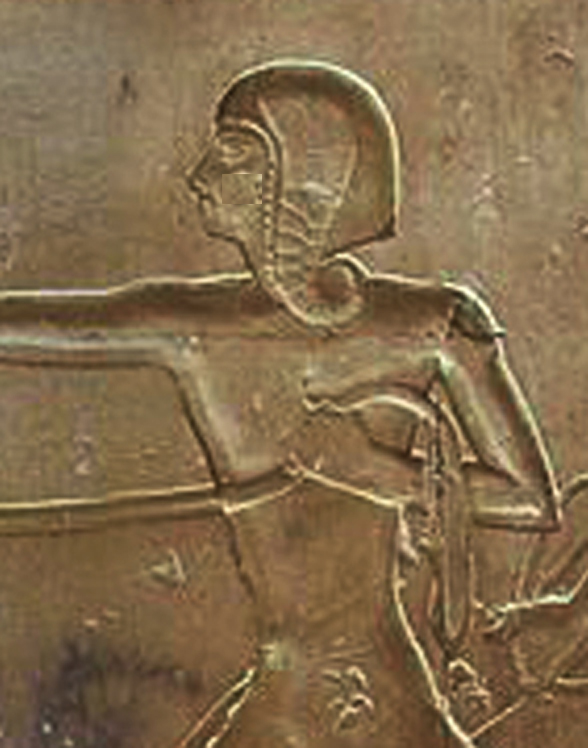
The main character is a son of Ramesses the Great, well-attested in history with a character that comes through clearly across the centuries.  Historically, he was a scholar and was credited with being the first archaeologist in history.  He served as High Priest of Ptah and Governor of Memphis, and was Crown Prince at the end of his life.  He fulfilled these roles with such distinction that he was remembered as a wise man for centuries after his death.

With these attributes, how can such a character help but be splendid?

Well, my would-be main character was overshadowed by his brother, the Crown Prince of Egypt, who stepped into the story as a quasi-villain, had a turnaround, and ended up stealing the show.  A character in a situation, he was far more powerful than his brother, far more interesting…

The original hero ended up holding his own, and we had two main characters.  It worked.

And it provided for me  a very good illustration of Beresford’s situation.