Sorting Through Boxes…


…I received quite a blast from the past.

This was lying demurely folded in a box of photographs.  It is not the first manuscript  I copyrighted. That honor goes to a Heroic Fantasy Trilogy that is so utterly silly, it will never see print.  Besides, I’d have to retype it.

This one has some sentimental and ‘lessons learned’ associations.  It was the first manuscript I sent around for representation, and I worked for a year with one agent (a very good one) polishing it.  Ultimately, he turned it down and I went with another agent who wanted to represent me.  www.pred-ed.com did not exist then. 

Amazing what you find in boxes.

The first copyrighted manuscript that I published was A Killing Among the DeadThat one came out in 2011.  this one (part I) was published last year.

25 years ago for the copyright on this.  And boy was it bad!

It’s pretty good now, and Book II is coming along very well.  Book III is nearly ready to go this very moment.

I have the three covers designed.

…And now back to writing… (and staying away from boxes)

Parisian Encounters – of Cops and Angels


Sometimes reality and mystery intersect in strange ways.  Things that seem unlikely or impossible become probable and likely.  We touch mystery and the sublime as we walk through our lives, and sometimes – but only sometimes – we stop to take a closer look. 

I had an encounter once that on the surface was certainly of this day and age.  I was nearly mugged, at the very least, on a back street in nighttime Paris.  But the echoes it stirred some weeks later spoke of something a little different.  My imagination?  Probably.  I have one, after all. 

I am writing the second book of a trilogy set in 1830’s Paris.  The idea came to me suddenly after listening to music.  Ideas come in odd ways, and when you unravel them, you often find your way to a story, as in this case.

Paris is a hard city to research.  It has charmed people for centuries, but those who seek to know of its physical properties prior to 1860, let us say, are going to run into trouble.  The wide, spacious boulevards that we stroll along, that we see photographed and painted, were sent lancing through the heart of the old city by Napoleon III in the middle of the nineteenth century.  Prior to that, it was a medieval city with crowded, colorful, twisting streets. 


I did not know this when I started writing The Orphan’s Tale.  I solved the problem by making it Alternate History (from a geographical standpoint). 

In those early days I pored over maps, purchased books with illustrations of the different arrondissements, with photos from above, all giving me an idea of the area.  I became very familiar with the streets of the city, which was not necessarily a good thing. 

I arrived in Paris in the late evening of a Monday in May.  The manager at my hotel, after giving me a far nicer room than I had reserved and paid for, told me where I could go to find a nice sandwich for dinner. (“Un crocque Monsieur, Mademoiselle? Bien sûr! You will love it!). It was along the Rue de l’Opera.  My Hotel was near the rue St. Honoré, which parallels it. 


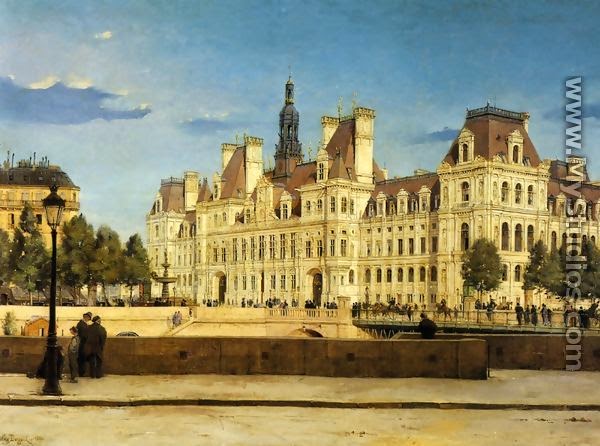
Avenue de l’Opera, Evening

Since I was arrogant enough then to think I knew the area very well from reviewing maps, I knew that I could cut out a dog-leg by following  a street that connected those two major thoroughfares. 

The detour looked fine on the map, but I quickly realized that it was little more than a dark alleyway. My instincts told me to turn around and go back, and I don’t generally ignore them.  As I was about to obey them, three people stepped in behind me, sending my sense of alarm soaring. I now had a very bad feeling. 
What to do?  Turn and face them?  To what good?  It was a high-sided, dark alley.  I was one person and there were three.  I chose to increase my pace.  I was wearing shoes called ‘City Walker’, made for walking in urban areas and styled like high-heeled pumps.  After some years of ballet, I was comfortable in heels.  I walked faster. 

Their pace increased. 

I sped up, myself.  I can walk very quickly, and at this point, with the adrenaline pumping through me and all my senses alert, I was going at a fast jog while not breaking out of my step. 

They increased their pace.  And now the alarms were sounding in my head.  

Half a breath and I was ready to break into an all-out run.  I could see the Rue de l’Opera ahead, not close, but within reach, and if I was ready to scream— 

I drew abreast of a small alleyway and out stepped a tall, strong-looking police officer. Not a Gen d’Arme with the little, beaked, flat-topped hat and the cape, but a municipal cop with a very stern look to him.   He stepped right into the alleyway, hands clasped behind him, and fronted my pursuers, who scrambled to a halt, turned and ran. 

I said “Bonsoir!” rather shakily, my heart thundering in my ears. He smiled faintly and bowed. 

At that moment I had the strangest feeling as though Saint Michael had stepped in to take a hand.  

The rest of my stay in Paris was notable for its beauty and my enjoyment, aside from the moment I realized that I was clicking photos in the Cathedral of Notre-Dame in the middle of mass.  (It is a huge structure, and I was not paying attention to the French words).  I realized my gaffe, capped my camera, sat down, and enjoyed the service. 

The Fontaine St-Michel, Paris

I mentioned my near-mishap to a friend, who said “You do know that Michael the Archangel is the patron saint of Police, don’t you?”  

That made me blink.  No, I hadn’t. 

I’m not one of those wifty types (no more than any other writer) and I know what happened: he probably heard the sound of footsteps, realized what was going down, and stepped out to intervene. I think I would have been mugged at best if not for him. 

It is strange how trains of thought will alter your conclusions.  I do know that at some point, some time in the future, I will face that man and say (in French, bien-sûr) “Thank you.  You saved my health, at least, then.”  And it may just be that he will sheathe his sword and say, “It was my pleasure, Mademoiselle.  I trust you enjoyed Paris…”


Finding The Write Path


Today I have the pleasure of participating in a Blogfest  hosted by Carrie Butler .  

Carrie had the idea of having us talk to the people we once were when we first started writing in earnest with the object of being published.  What did we learn?  What advice can we give?  What encouragement? 

Carrie has joined with her co-host, PKHrezo to compile those posts and put them out as a free e-book.  It’s a wonderful idea, and I’m delighted to be on the Blogfest.

 * * * * * * * * * * * * * * * * * * * * * * * * * * * * * * * * * * * * * * *
Dear Diana, 

So you’ve decided that you like to write and you like entertaining people with your writing.  Now you are getting ready to do what it takes to be published.  It’s pretty exciting, isn’t it?  I remember how it was.  And I remember, too, how slowly things happened, how much waiting there was.
 
There are a lot of lessons to learn, and experience does tend to be the best teacher, but let me give you a few pointers that will help smooth things: 

* Cultivate Humility / Drop Your Arrogance
You may have ability, talent and drive, but so do a whole lot of other people.  If you keep shouting about it, they will (choose one metaphor): pull out their earphones/ switch channels/ cut you dead/ dismiss you as a pain in the neck/ actively hate you.  

Years ago, just out of college, I sent around a manuscript.  I received a rejection note that said that the manuscript needed work.  I am embarrassed to say that I wrote back a long, angry letter saying that I didn’t need to improve the thing. (Did I say I was very young?)  I came to my senses not long after that.  I have never gone into a tirade with anyone.  (And I have never queried that agent – who was very nice to send me a detailed comment) 

* Don’t be Shy
Yes, I know I wrote the paragraphs above.  Odd as it sounds, while some writers seem to be arrogant, I think many of us have a fear that people will read our work and find it lacking.  Well, maybe someone will.  You have to deal with that.  But if you don’t ask for advice, for input, for guidance, you will never know how you are perceived, and you will never know how you can grow. 

* Don’t put all your basques in one exit – er, I mean – Don’t put all your EGGS in one BASKET. 
Ideas for other stories will occur to you: write them down.  Make some notes.  You will have something to fall back on when you finish your current, engrossing project.  Believe me, the sense of futility when you have nothing to turn your energy to can be crippling.  This helps avoid it. 

* Carry a notebook and jot your ideas. 
You will also end up jotting grocery lists, phone numbers, the name of that wonderful recipe someone made that you plan to look up.  That is all right.  The presence of a notebook where you put your jotting is crucial.  Otherwise you’ll be writing on napkins, on the back of dinner receipts, on brochures, and what you don’t end up throwing out unintentionally will be crumpled beyond retrieval and all your magnificent notions will be lost.  (The magnificence of a notion increases in direct proportion to your inability to locate and capture it, by the way.) 

*BACK UP YOUR WORK. 
Not in one single location.  Remember when your hard drive crashed?  If you hadn’t heeded that advice you would be in the soup now! 

*Do your research
This is a piece of advice that can be taken many ways.  If you’re writing about history, make sure it’s accurate, or else give reasons for any deviation from the facts.  In this case, though, I am talking about researching the steps you have to take to meet your goal, and the players along the way.  http://www.pred-ed.com is not a bad place to start.  I would never have had all my work sidelined by a dishonest agent if I had done that years ago.  To be honest, Pred-Ed did not exist, and I was not on the Internet, but I could have curbed my wishful thinking and taken the time to check things out. 

*Write a working Pitch, Synopsis and Blurb for each project. 
Seek advice on them.  As a story evolves, they will change, but you can’t publish without them, whether you self-publish or go the Traditional route.  It is an excellent idea, as well, to have a condensed pitch, 300 characters or less, to put in online submissions as well as a super-short twitter pitch that you can throw into the mix when there is a ‘Twitter Pitch Frenzy’.  Tweak them regularly. 

* Improve yourself:
You’re a good writer.  You know it, people you respect have been telling you so.  You can feel the talent you have, and you find nothing so satisfying as finishing a scene and knowing that it works.  I have some news for  you: if you do things right, you will be a far, far better writer in a few years than you are at this moment.  

I’m not saying you’re bad.  I’m saying that if you do things right, you will continue to improve.  Read other books.  Listen to people.  Keep notebooks.  Let yourself grow. 

I wish I had attended more workshops and conferences.  I’m doing that now.  No one is going to look at you and voice your secret fear: that you are a phony.  If you write, you’re a writer.  And you’ll gain confidence and comfort associating with other writers.  You will also get some fabulous ideas and tools.

*Roll with the punches
There are two or three bestselling, quality authors whose work I really don’t like.  It doesn’t mean they are bad: it means that they are not to my taste.  Apply that thought to yourself.   You are writing stories.  Some people will love your work and some will declare that they would rather have their teeth pulled than read anything you have written.  Even the nastiest expression of dislike can have a grain of helpfulness in it, if you look at them the right way. 

*Associate with other writers. 
You learn a lot by listening and paying attention. And  you can share what you know.  It’s rare that even the most green newbie doesn’t have something I haven’t thought of.  And other writers make great beta-readers.

*Contribute (or, ‘Give as well as take’)
If someone does you a favor, return the favor.  Do a beta-read.  Offer a line edit (just make sure you’re good at grammar and punctuation) or a character critique. 
 
*Appreciate your readers
*When you are contacted by a reader, take it as the compliment it is and respond promptly and pleasantly.  You wrote your stories for your readers.  They are your customers.  Never, ever, ever respond to a review, especially an unfavorable one.  

*Be accessible. 
If someone is interested in  your writing, that person is also interested in you.  An online presence is crucial.  And be selective about what you put there.    

*Stop viewing other writers as adversaries. 
As Hart Johnson said in an interview I posted, we are not in competition.  The more good stories are out there, the more people will read them and want more.  Sincere compliments are always a good idea.  And if someone says something nasty about you, ignore it. 

 
And the most important advice is this:

*Write. 
Just keep writing.  Even if you think it won’t go anywhere, write.  Edit your work, jot ideas, fiddle with plans if you like – but at least once a day write something.  It is odd how putting forth effort actually strengthens you.  I learned this after a years-long dry spell.  It was wonderful when the log jam broke.  The dry years were very hard.

Those are my thoughts.  I hope they help you.  

Much love and a smile,

Diana
www.dianawilderauthor.com

* * * * * * * * * * * * * * * * *

“I give permission for my entry to be included in the e-book compilation without royalties and/or separate compensation.” 

Finger-Pointing – A Pet Peeve


I was wandering through an online bookstore recently.  It’s a good way to while away the time or, in my case, fritter it away.  I think bookstores are actually wormholes, if you’re a Trekkie or a sci-fi addict.  You go into one of them as young as Rip Van Winkle at the beginning of the story, and you emerge to discover that hours, at least, have passed.  I don’t mind.  I love sifting through books, finding associations, looking at recommendations –

If you like this…you’re sure to like THIS…


Generally I find THAT interesting, at the very least.  This afternoon I was looking up an author who had written a book in an era that interested me (and that I have not used as a setting for anything I’ve written).  The title of one book of this author caught my attention, and I clicked on it, found other books by the same author, read the author’s profile, and thought, Hmmm…  


There were quite a few books, and the writer’s credentials were excellent.  I was mulling over buying one or another of the writer’s works, just as an intro, with the possibility that I had found a new favorite.


…And then I saw that this writer had published a sourcebook on a subject that I found very enjoyable.  It was geared toward writers with a specific focus.  Some hints on what to do and what not to to, and a compendium of facts that would be useful.  


I was sold.  I was, as they say, there.  This was a book that I would find very handy, and I decided I wanted it in paperback rather than electronically, because I could flip through it, mark it up, dog-ear it and put tabs in it.  A lot of the information in there was familiar to me, but some of it was confirmation of what I had wondered about.  The writing style was good, too.


.  .  . But then, as I got into the text itself, I began to see how this author made points.

“In her book ‘Mary’s Little Lamb’, Julie Jones has obviously done absolutely no research into sheep-culture because she has her sheep’s fleeces smelling of ambergris rather than bacon grease, and any moron who knows how to research will know that sheep hang out with pigs and so would smell of bacon grease.  In fact, in Jones’ book I find so many errors, I used up a pink highlighter underlining them all!  Research is Crucial!”

Well, yes, I thought.  I looked further.  Maybe this was a one-timer.

Not quite.  Every time the writer made a point, an example of the wretchedness of error was given – and the writer’s name and that of the book were given.  The tone was scornful, belittling and gloating.

Those examples might have been appropriate for a review.  This book was a sourcebook, not a review or a survey.  The writers that the author was putting in the pillory were storytellers who were not pretending to be scholars or experts.  They simply had some (rather bad) mistakes in their books that could have been avoided with some research such as that provided by the author.

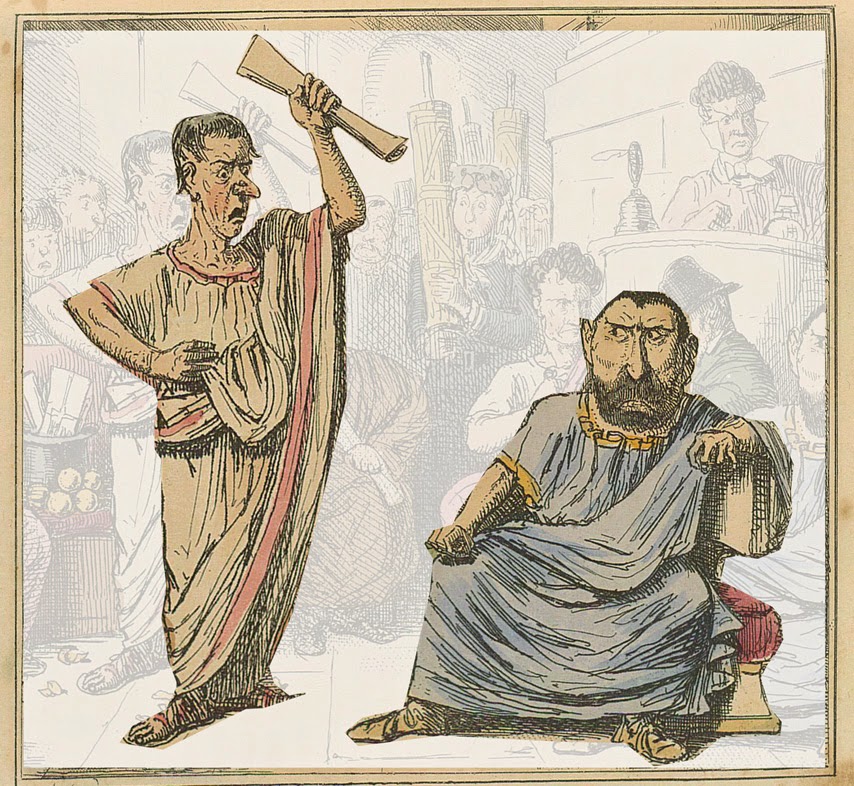
Years ago I read the private journal of the Roman Emperor Marcus Aurelius.  The title has been translated to ‘Meditations’, but I don’t think it is accurate.  They were his writings to himself, a sort of journal.  The translator remarked on one feature that confirmed, to him, the essential kindness of Marcus Aurelius: when someone is mentioned as having done something excellent, his or her name is given. But if Marcus is speaking of wrongdoing, vice or stupidity, the person remains nameless.  I went back through the book and checked: the translator was correct.

Marcus had the right of it: he was a great man and a good one.  

But the writer of the sourcebook – 


Well, it wasn’t a sourcebook.  The scornful rants made it something less.  The writer, who wrote books that required the sort of research featured in his or her book, was belittling the competition.  And that, in my book, is gauche at best.

I put it back on the shelf, figuratively, by backing out of the page, deleting my browsing history and going elsewhere.  I don’t need to promote backbiting.


Pity.  The (non-sourcebook) books looked interesting, too…

Insecure Writer’s Support Group


Today is the first  Wednesday of the month, which means it is IWSG day. The once-a-month blog hop started by Alec Cavanaugh . IWSG = Insecure Writers’ Support Group (click the words to visit)

We share our insecurities and support each other with empathy, sympathy or practical suggestions. 

Today is also the second day of the A to Z Blog Hop (which I am enjoying, but not participating in because I have a whole lot of other things that I have committed to including finishing an installment of a trilogy by Christmas, participating in Camp NaNo, working (my job keeps me busy) and other things.

This month I will share a graphic that expresses beautifully, at least for me, a writer’s reaction to someone who:

  1. doesn’t ‘GET’ your work.
  2. insists on saying so
  3. tells everyone you are a writer 
  4. tells everyone how many books you are selling (and they have no idea of the number)
  5. insists on sitting you down and telling you how the thing should have ended
  6. gets miffed when you take a half hour to write
  7. tells you what you should write so that you may make money

What do you do?

DEVELOP A THICK SKIN.

This is a blog hop with lots of good participation.  Go forth and read!

http://www.linkytools.com/basic_linky_include.aspx?id=103850

Shades of characters – Introduction


It is A to Z time.

Until two days ago I was thinking very hard about participating, but I concluded that this year I would have to sit it out as a poster.  I am trying to meet a deadline on the second installment of a trilogy, work is hectic and I’m tired.

That does not mean that I won’t be enjoying it.  I will be reading and cheering and clicking and commenting and following during the A to Z blogfest. 

Instead of my participation, and well aware that I will be lost in the wave of awesomeness that I plan to follow, I decided to bow to an urge I’ve felt for a long time and begin a series of regular posts on a subject that I have always enjoyed:
Heroes—Villains—Protagonists—Antagonists—Nice guys—Jerks
What are they?  And in any given work of fiction or, for my purposes, in a movie, who is which? We tend to blur things.
We have definitions of all these:  (from Merriam-Webster Online.  I wanted to use the Oxford English Dictionary, but $295 per year for a subscription was not do-able).  I will follow them in my series of posts.  I will say right now that ‘hero’ encompasses male and female, as does ‘villain’.

Hero:
a person who is admired for great or brave acts or fine qualities
the chief character in a story, play, movie, etc.


Villain:
a character in a story, movie, etc., who does bad things


Protagonist

1 the principal character in a literary work (as a drama or story)
a leading actor, character, or participant in a literary work or real event
Antagonist
one that contends with or opposes another :  adversary, opponent
Nice guy
think vanilla and good as gold.
Jerk
an annoyingly stupid or foolish person
an unlikable person; especially :  one who is cruel, rude, or small-minded
It’s a subject I enjoy. I have some questions whose answers should be amusing:  

  • Can one be a hero and yet a secondary character?  
  • Can one be the protagonist and yet be a villain?  
  • Can you have more than one hero?  
  • Does a villain have to be a jerk?  
  • Are antagonists necessarily villainous?
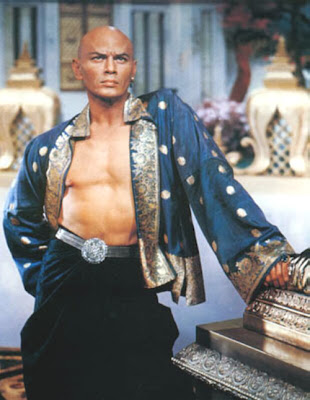
As the King of Siam might say, Is a Puzzlement:


I’ll explore those in my posts.  I think it will be fun.  Will I use my own characters?  Probably not.  Drooling is so unappealing.
My first in the series will be Wednesday, April 2.

Let Me Entertain You… Please…


I like telling stories.  Forming and telling stories is what makes me tick.  I see things, think of what lies behind them and what lies before them in the future, and from that I come up with stories.  It sounds strange when I phrase it like that, but it works that way for me, as I posted here.

We write our books (most of us) to entertain people. I am still blown away when I see that someone shelled out cash to read something I ‘made up out of my own head’, but maybe that’s just my oddness.  Our creativity is fueled by everything around us – whether stories our grandparents told us or myths we have heard or things we have read.  

Arthur O’Shaughnessy put it interestingly:

We are the music makers
And we are the dreamers of dreams,
Wandering by lone sea-breakers
And sitting by desolate streams; – 
World-losers and world-forsakers,
On whom the pale moon gleams:
Yet we are the movers and shakers
Of the world forever, it seems

I am not sure that I would call myself a ‘Mover and shaker’ so much as an observer and reporter and ‘what if’ er.  I watch the world move past me, I catch glints of thoughts and I find the stories.  And I tell them.  I can’t help it: it is what I love to do, and I can no more not weave stories than I can stop breathing.

Everyone has something singular about him- or herself.  We are not all built the same, but we all have something that touches us, that makes us shine, that brings us to action.  Perhaps the hardest part (for me) is not to share this quirk, if you will.  It is rather like having a gift and wanting to give it, hoping that those who receive it will enjoy it and – somehow, some way – be strengthened or refreshed by it.

Listening to Poetry


I remember speaking with some others like me.  One fellow said that if people would only listen to him, trust him with their time, and let him entertain them, he would do it for nothing. I remember nodding.  I understood him.

But then someone else spoke up and said that, well, what was the point of doing that?  After all, there was ‘nothing to be gotten out of it’ that way.


I agree that no one should ever be sold short.  If you are producing something that people are willing to purchase, well and good.  Some things, however, go beyond buying and selling, and the pervasive ‘what’s in it for me?’ mindset troubles me. And I am encountering it more and more frequently in my own area of joy.


When will I start seeing money?  What do I need to do to get more sales?  Why aren’t people buying?  What are the contacts that I need to start selling?  Well, if people are reading this sort of work, then I guess I’ll have to write it!

I am not saying that it is wrong to sell your work.  I am not saying that it is wrong to seek ways to find more exposure, to make yourself known to others, to make your offerings available to more people.  There is nothing at all wrong with sharing, and there is much that is right about being paid for your hard effort, but I sense a serious disconnect or, perhaps, an area that has not been thought through.

Someone said, “If I can’t make any money, I don’t see any point in continuing.”

Is the measure of the worthwhile nature of an activity the amount that people are willing to pay for it?  In that case, I know of a great many athletes who might as well take up a seat before the television set and forgo their archery practice, golfing endeavors or horseback riding because they will never win The Masters or star at the Devon Horse Show’s hunter/jumper classes. They aren’t ever going to be asked to endorse anything in exchange for money.

What price agony?


And what of the singers who do not sell their recordings?  Singing for one’s own enjoyment or the enjoyment others is surely not pointless if others are enjoying it.  Causing agony is another matter and should be addressed as it comes up.  

But what of ‘the fire in the belly’ that makes me, at least, burn to bring my characters to life, to share them with others, to enjoy their antics and be touched by the things that they have done.  I am at this moment about to quickly jot a scene where one character, a man with a difficult childhood who discovered the constellations in the night sky, tells another man who is despairing and somehow has fixated on the blackness of the night as a sign of his own despair, that “the stars are there – right there! – behind the clouds.  Cassiopeia, The Swan, Orion – all are there, as they have always been.  Trust that they are and don’t rely only on your own sight.  I swear it!  There is never any need for despair!  I promise you–  I promise you!”

No one else will read it.  But I must write it.  Every little bit of joy must be savored…

Celebrations – February 14, 2014


Happy Valentine’s Day!

It is Friday again, and a time to stop and take stock of the small things we celebrate.  Thanks to VikLit, who had the idea for this wonderful bl0g hop, we enjoy the thoughts of all that is worth noticing and celebrating.

Why don’t you join the hop?  Details are at the end of this post.

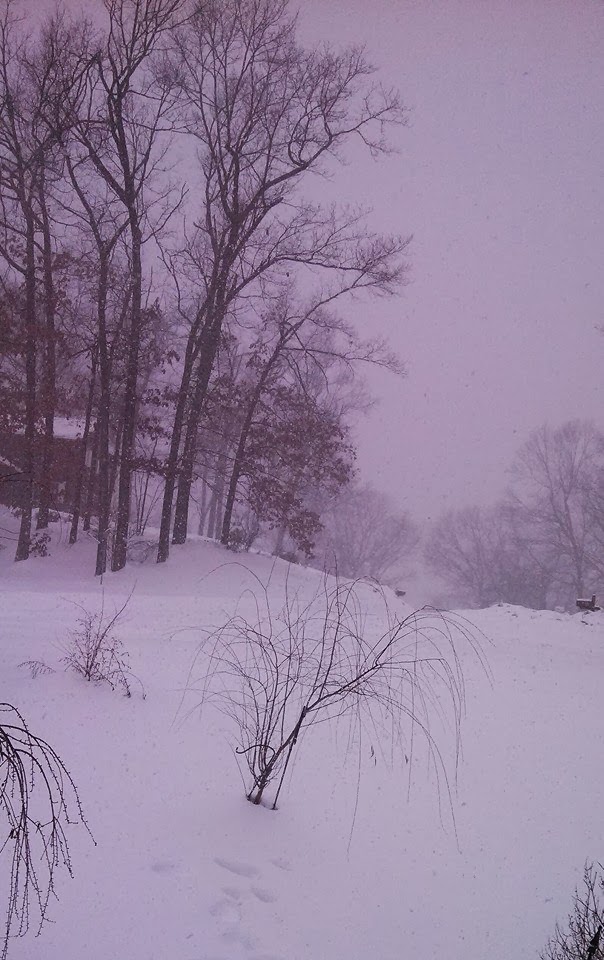
What am I celebrating today?  Hm.  digging out of a bad snowstorm for starters.  It led to some lovely views of snowing and blowing.


My neighbor came over with his snow-blower and cleared my driveway, which was wonderful of him (and will earn him a generous gas card).

I’ve been watching the fire burning in the wood stove, sitting with my cats, scrumbling my elderly dog, cooking, and working from home.  It was nice.

But what I am celebrating at the moment is a plot breakthrough.  I am working on a trilogy, the first of which, The Orphan’s Tale, is already out.  (You can read sample chapters on my website: www.dianawilderauthor.com ) 

The story was originally envisioned as one volume, but it grew in the telling.  The first volume is polished, the third, which is very active, intriguing and has a heartwarming conclusion (at least for me) is nearly set, but the middle one was dragging.  Things weren’t working.


And then I had a brainstorm.  It is working.
I’ve been writing a pivotal scene that is set in a fine restaurant in 1834 Paris, and it has had me chuckling aloud.  Count d’Anglars is the French Minister of Police.  Malet is the senior Chief Inspector in Paris.  They refer to ‘Lamarque’, who is the Prefect of Police for Paris.  They are dining in a very fine restaurant.


          d’Anglars brought his napkin to his lips as the waiter brought the platter to him.  “Thank you.  This is excellent.  My dear sir, allow me to serve you some of this braised carp in burgundy,” he said, setting a portion on Malet’s plate.  “It is justly famous.”
         Malet, eyeing the dish, mentally acknowledged some deep-seated reservations regarding purple fish.  He cut a piece and tasted it, located the saltcellar, and spooned salt over the portion.
         “But you have not touched your oysters, dear sir!  Fines de Claire, the best I have seen in a long time!  The blue color comes from algae upon which they feed.  Do try them – such a splendid taste.”
         Malet eyed the oysters that lay in their juice in the shells.  He had long ago found oysters reminiscent of nothing so much as the eye of a person who is making a grimace by pulling his lower lid down and rolling his eye upward.  If algae made these items blue, he thought, he would never, ever eat a brown or green oyster.
         d’Anglars was still watching him with the enjoyment of one who shares what he considers a rare treat.
         Malet speared one of the specimens with a fork, lifted an eyebrow at the juice that came squirting out and then brought it to his lips.  The salt scent of the ocean smote him in the nose.  He held his breath, deposited the oyster in his mouth and swallowed, following that effort with a large mouthful of iced Chevalier Montrachet and a chunk of bread.
         d’Anglars watched him reach for another oyster. “Wait,” he said.  “I perceive that the effort of swallowing that oyster was less than gratifying.”
         The mouthful gone, Malet sipped his wine again and set it down.  “I was raised beside the ocean,” he said.  “It was under my window.  All its smells and sounds.  I miss it sometimes…”
         “I imagine, then, that there are parts of it that you do not miss, sir.”  d’Anglars motioned to the servant, who was standing nearby and grinning.  “Bring a dish of beef, if you please.  Your excellent roast in the claret sauce, if it is available.  And that excellent Chambertin that I enjoyed the last time I was here.”
         He turned back to Malet, who was surreptitiously swishing the Montrachet in his mouth and then swallowing with an effort.  d’Anglars winced.  “And since they are a penance for you, I will gladly suffer through the rest of your oysters.”
         Malet frowned a little, but the beef in claret sauce was beautifully prepared, and the rest of the meal that followed was equally delicious.  d’Anglars’ second daughter, Clémentine, was planning for her coming-out party, and was hoping that ‘M. l’Inspecteur’ would perhaps ask her to waltz with him, since it had been he who had taught her at the first ball she had attended, however surreptitiously, at the age of seven.
         The memory made Malet smile.  Some questions had come up with matters that predated M. Lamarque’s return from Plombières.  d’Anglars brushed them aside.  “M. le Préfet will be returning to complete his cure.”
         “Then his gout has returned?”
         “No,” said d’Anglars.  “He has a different sort of pain that came on suddenly.”
         “Pain?  Surely not his heart!”  Malet remembered various occasions when the Prefect had dealt with an issue by clutching at his breast and announcing that he was not long for the world if the vexing matter was not resolved.
         “No, not his heart,” d’Anglars said, nodding to the waiter, who brought a decanter of cognac.  He poured a glass for Malet and one for himself, and stretched his legs out before him.  “He will be returning for a resumption of the cure and you, sir, will take his place once more.  You handled matters with such distinction the last time, I have great hopes that you will again.”
         Malet was frowning.  “This is very sudden.  He is not in any danger?”
         “Not at all.”
         “But you mentioned pain.  If not his heart, then…”  The thought of the Prefect ill was not reassuring.
         “It is somewhat south of that organ,” d’Anglars was gazing at Malet through the golden cognac with the hint of a smile.  “In fact, the pain manifests itself when he sits.”
         “Lumbago?  If he is truly ill-“
         “It is nothing that some time away from here, with good news at the end of it, will not cure.”
         When will he leave?”
         “Immediately.  We will speak with him tomorrow before his departure.”  d’Anglars sipped the cognac and set the glass down.  “I fear, though, that the farewell may bring on a recrudescence of his symptoms.”
         Malet’s eyes narrowed.  “This is because of me, isn’t it?”
         d’Anglars sat back and swirled the cognac in his glass.  “I am afraid that it is.”
         “Monseigneur?”
         “We envisioned it yesterday.  I am very sorry that we were correct.”
         He eyed Malet’s expression.  “I am assigning a bodyguard, my dear Malet, Effective immediately.  Your presence outside a certain doorway in a particularly filthy part of Paris has led to repercussions with which we must deal, M. Vidocq and I. You are a most troublesome fellow, sir. But indispensable, personally and professionally.”
         Malet pushed his cognac away.  “I don’t understand.”
         “Nor do we. But we will.”

         It is so nice when things fall together.  This weekend should be very productive.  (Scrapping an unsatisfactory plot line is always fun…)


(And I am remembering that today is a Friday!  I hope you all have wonderful weekends.)


http://www.linkytools.com/basic_linky_include.aspx?id=179014

The Lady with the Pen – An interview with Inge H Borg


I am delighted to present an interview with Inge H. Borg, a multi-talented lady who writes fascinating novels covering several different genres.  I think an interesting life makes for interesting writing (and considerable charm) and Inge fits this notion.  She graciously agreed to let me interview her:

You are  a lady who knows what she likes and has the Austrian flair for expression and charm.

Diana, thank you for your kind words. Now that my head is bigger, i.e. swelled, I am happy to answer some questions. I really do appreciate my visit with you and your blog-fans here.

In the time that I have known Inge H. Borg (her author’s name) I have learned that she is humorous, wise, understanding, with a spark of mischief.  I also learned, to my surprise, that she was not born speaking English, but learned this terribly difficult language, which she speaks better than I do. 

In the course of our conversations she has let slip facts about her life that hint of travel, of cosmopolitan experiences, with a dash of intrigue.  So let me ask: can you tell us about your life, where you grew up, what you learned and where (schools?  Training?) and what brought you here? 

I am an old Austrian mountain goat (think Heidi), but left home on a long train ride when I was 18 to do the “au pair-thing,” first in London and then in Paris. An opportunity opened up and I worked a year in Moscow at the French Embassy (Talk about intrigues. Perhaps better not.) 

I actually vacationed in Sochi (recently of Olympic fame). This is interesting because I left Russia for a great job at the 1964 Olympic Winter Games in Innsbruck from where I was transferred to Vienna to help prepare for the Tokyo Games; alas, I had to wait for another 8 years before I got there on a tour. 

In Vienna, a new company recognized me as a ‘gypsy’ and sent me to Chicago. After three years, my heels itched and I moved to Boston. Loved that town! However, a former NYC multi-national corporation beckoned and I moved to New Hampshire to join the ranks of “them,” meaning that if you were recognized as one of “them,” the price went up as soon as you entered an antique store 

During another frigid winter, somebody said that I would love San Diego with its good opera and palm trees. That was enough for me…except that my boos cautioned that in California, they were all crazy and young. Heck, I wasn’t even dead yet. Sold my little house, gave the cat away (he rejoined me via American Airlines six months later), and drove my little Opel cross-country. And what a grandiose country it is! 

After I managed to buy a townhouse in La Jolla, that Jewel of the Pacific Coast, I thought I had died and gone to heaven – I also thought I would never leave it. You know what they say! Okay, it was time to come down from my lofty existence, and I searched the Internet for a little house I might like with high ceilings and a garage. Anywhere on a lake. “Anywhere” turned out to be in the Foothills of the Ozarks. I mean, Arkansas. 

Okay. Off I went. This time in an older Volvo and with my old cat. House turned out to be perfect. While I am not right on the lake, I look out over a golfcourse. Alas, once again, it is colder than I had imagined and I dream of warm ocean breezes and tropical islands. Who knows what the future holds. 

Aren’t you sorry now you asked?
Not at all, Inge.  As one who moved a great deal, I admire your adventurous outlook. 

I encountered you for the first time on Goodreads, where you are a Goodreads author.  You had quite a few books to your credit – poetry, humor, intrigue.  Can you tell me about them?
Inge H. Borg’s books, from Mystery to Intrigue to Poetry to heartwarming memories…
 I am glad you touched on some of my books’ ‘traits.’ Probably like most of us, I started out being ‘earnest’ with my outpourings, mainly my poems. 


Then, I discovered that there was this mischievous splint in my soul and I dared to mix some lighter stuff into my writing (and if anyone asks, I will steadfastly deny that any of that stemmed from my own experiences. I will also deny that I sometimes tell a fib). 

How long have you been writing?

I began to concoct fairly good essays rather early mostly to make up for my mathematical ineptitude. (My mother even told the school principal to ‘let it go.’ It was hereditary.) Luckily, the stunned man obliged and let me matriculate with good grades all around.

Tell me about passages in your books of which you are most proud of. 

I feel that the three Prologues for Khamsin, Sirocco and Cataclysm are my most ‘cherished’ passages. They set the mood, introduce foreboding, and even clarify the choice for the titles. But for the sake of not making this interview interminable (people hate that), why don’t I post them separately on my blog. By the way, there is a funny annotation from a native English-speaker after he was told (by me) to leave them alone!

What was it that made you start writing?

You mean, books? Actually, it was a chance suggestion from a colleague at work. I started my painstaking research (no Internet then) in 1991. When I had Khamsin done (all 250,000 words of it), my eager ‘mentor’ offered himself up to be my ‘editor.’ 


The outcome was quite funny (in retrospect). Not to bore you here, I will write another post for my blog as to how that little venture worked out:

 http://devilwinds.blogspot.com/

I have linked to my review of Khamsin.  The happenings of that novel appear in your later ones, most intriguingly.  Tell us about that.

After years of querying agents (surely you remember that painful process), just about two years ago, I happened on an article about Amazon’s self-publishing opportunities. I slashed and burned 100,000 words until I was happy with this Historical Fiction novel about Ancient Egypt. 


The learning curve of figuring out how to format for e-book and print was as steep as my first cover was banal. Luckily, we befriended each other on Goodreads – with the result that you designed a wonderful cover for Khamsin; windswept and foreboding; I can taste the gritty sand between my teeth. You also inserted a winged scarab which I then gave more importance in the novel itself—hence, the Legends of the Winged Scarab series was born; thanks to your inspiration. 


Book 2 – SIROCCO, Storm over Land and Seais a modern-day archaeological thriller that deals with the Golden Tablets from Khamsin. From Cairo to the Kharga Oasis, through the Red Sea. A storm-tossed sailboat in the Med, with action on Cyprus and a devastating sirocco that sweeps over Crete. (Travel, anyone?)

One of the main characters is a powerful fierce Egyptian archaeologist who has vowed to save his country’s heritage from the new Morsi government; and is fired for it. Oh, he always wears a Fedora hat. (Anyone?)

What projects are you working on at the moment in the writing field?

I am working on Book 3 – After the Cataclysm. We now follow those Golden Tablets to an island off Venezuela. I have also given a real ghost ship a new life (they are still looking for it in the Atlantic; I will have a link to its dedicated website in my book). This dystopian novel plays out around 2016 after the eruption of a super-volcano.

You have written about, and worked with, rescued shelter animals and have adopted two beautiful Maine Coon cats. Pasha and Lilliput. Since Pasha  is the more gregarious one, his handsome self is on the cover of his own book.  This obviously plays a large part in your life: tell us about it.

After I retired and moved to Arkansas, I was roped in for an hour or two a week to do volunteer work at a small local animal shelter. You know how that goes.


Within a short time, I had chucked my high heels and silk suits and was scooping you-know-what on a regular basis. My book not only tells of the wonderful cats and dogs we cared for, but of some of my initial hilarious ineptitudes and how I was taught to overcome my lifelong cynophobia; by the dogs, of course. 

Let us pretend that you somehow came into a situation where you could go wherever you wished and do whatever you wished.  Where would you go, and what would you do?

Have a delightful, simply little bungalow in Hana on Maui. There, on my terrace facing the ocean, I would – what else – write the day away. 

If you could go back to any time in history, whether ancient or recent, where would you go?

I often felt that I was born one hundred years too late, and that I would have loved Vienna during the last of its imperial hurrah. Of course, my dream fully assumes that I would have belonged to the privileged few. If, in reality, I would have been a chambermaid or worse, things obviously would not have been so much to my liking. Ah yes, we all have our little illusions about ourselves…I only pray that I do not have them about spewing forth pertinent and interesting words by the thousands.

I am going to be coming by for dinner at your house, Inge.  What would you serve?

How delightful, Diana. I know that you are a good cook. I, however, am an utter disaster in the kitchen. So, if you want meat, I hope you like shoe-leather.

Hm…  Shoe leather…  I think that is called Jerky here.  I like jerky, but perhaps I’ll roll up my sleeves and cook something while you entertain me with sparkling conversation and some Merlot (see below).

I have two menus for dinner guests; after that, understanding friends are either served the same thing, or guests don’t come again. Since one of my menus includes fresh seafood (easy when I lived in San Diego), things are a bit more dicey in Arkansas. Here, the stuff is either frozen or it’s fried catfish. So, I think I’ll serve my failsafe cheese/broccoli soufflé with a nice Merlot (same difficulty goes for wine; this is a dry county and my neighbors and I often lug contraband for the whole street over from the next county); astounding—or  should I say archaic—laws in this day and age. 

But I am sure your blog-fans are not interested my lack of culinary prowess. Hopefully, they’ll want to check out my writing as well as that of other talented Indie authors whom I have featured on my two blogs. 

For my historical fiction, my blog is:

Pasha, that sweet beast, has his own blog where I also feature other authors and their animals.

To toot my own horn, I hope that your readers will check out my various author pages:

Diana, thank you again for having me on your great blog.

It is always a pleasure ‘talking’ with you, Inge, and I think everyone will enjoy the links and the books and getting to know you.  …now, about that Merlot? 

– – – – – – – – – – – – – – – – – – – – – – – – – – – – – – – – – – – – – – – – – – – – – – – – – – – – – – – – – –

Khamsin The Devil Wind of the NileKhamsin The Devil Wind of the Nile by Inge H. Borg

My rating: 4 of 5 stars

Ancient Egypt is thought of, by many, as the dawn of history. This book takes you to a time that is before history, bringing to life names that we only know from fragments, harking to a rhythm and image that is smoothed and darkened by time. And yet the author makes them human.

This is the very earliest period of dynastic Egypt, a time when the border between history and legend is blurred, when the kings and queens of that land seem to be gods that stepped down from the bowl of the sky and trod the land…

The author states:
At the dawn of the great Egyptian dynasties, before any Pyramids were built and the camel was introduced to the Nile regions, certainly long before the royal title of Pharaoh came into use, Aha rules as the second King of the First Dynasty… H i8s triumph and tragedy plays out centuries before the Greek colonization of the Two Lands… To this day our vague answers are drawn only from relics and mummies of much later dynasties, their cities wrenched from the hot red dust driven into the verdant river valley for fifty days by the Khamsin, the dreaded Devil Wind of the Nile. In Khamsin, the reader is immersed in the life of the fertile Valley of the Nile, as flesh and muscle have been molded back onto those brittle bones…

She molds them well. We meet characters that catch the exotic cadences of the faraway times as we follow the fate of a life conceived in the beginning pages. We watch first one character and then another – the general of the Fourth Army of Amun, who is tender to his faraway wife, lusty with a woman of the desert, and crafty. (And I must remember never to go back to that time and agree to carry an important message…)

And we meet Ramose…

This is a story to savor, written lusciously, with care and enjoyment. I grew to love Ramose, to enjoy his dry wit and his wide-eyed mysticism. The writing is lyrical at times, so rare in a time of utilitarianism, and the Khamsin is in the background, lending its tone to the story.

I enjoyed this – and I rejoice to tell you that Ms. Borg has written another, arising from this but far, far in the future from this story. I think you will enjoy it, too.
View all my reviews

Something Taken – Interview with Jerrie Brock, Author


Something Taken – By Jerrie Brock
I asked author Jerrie Brock if she would mind being interviewed on my blog.  I encountered her two years ago when I was involved in the ABNA (Amazon Breakthrough Novel Award) Competition.  Her submission was a beautifully done story of forbidden love – a young girl and an older man, both lost and tempest-tossed.  I was touched by the story, and by the deft way she handled people who might have been viewed as misfits, but were creations of heart, soul and strength.  And there was another theme that caught me…

Her first published book, Something Taken, is available in Kindle and in paperback.  It is a wonderful read.  (My review on Goodreads, Amazon US and Amazon UK is below).

She can be peppery, kind, understanding, and very direct.  She is a woman of wide experience with the sort of humor that comes of seeing many things and understanding them.  I enjoyed interviewing her.  I think you will enjoy reading of her.


How would you describe yourself?   


Jerrie Brock and two of her dogs

I barely make sense to myself, so describing myself is beyond me. The most appropriate description might be what my beloved grandpa used:  “You’re like fly shit, you’re all over the place.”  Needless to say, I probably wasn’t the easiest kid to deal with, and I don’t know if I have improved much over the years.  Fortunately, I found a man to put up with me.  We were married 25 fun, goofy years but he was much older than me and he died seven years ago.  I think he’s irreplaceable.  

I enjoy working with my hands, and most my employment has been in maintenance, as a supervisor to a mostly male workforce, often technical.  Landscaping is generally my field, but it involves more than mowing grass.  For fun, I restore old furniture and antique machinery, I build things like decks, gazebos, model trains layouts, I garden; you get the idea. When I relax, I read, sometimes a book a week, sometimes a couple of books a week. I don’t watch TV, honestly, I have no idea of what’s on TV or at the movies.  Compared to what my imagination conjures when I read, TV and movies tend to disappoint me or put me to sleep pretty quickly.  I converted an 85 foot Pullman Passenger Car to a library to avoid getting lost in stacks of books around the house.  Of the few thousand books, aside from the many technical manuals I use for building and restoration, and some of the ponderous reference books, I’ve read at least three quarters of those books, non-fiction and fiction.  Some of my favorites are my Peanuts collection, the cartoon books I started collecting back when I was very young.  Some of them are before Linus was born.  Another is a book commissioned by Congress in 1876 chronicling some of the highlights of the first 100 years of the US .  You’d be amazed at what was considered big news then, eclipses, droughts, etc. Things we never even hear about today.  The other is my Oxford English Dictionary—every 20 volumes.  Few people know what the true Oxford Dictionary is, or how it came about but it is so cool.  The citations for A go on for six and a half pages.  I read that every now and then, for fun.
 
You’re a writer – what do you write?  

My favorites are historic fiction and contemporary fiction, based on real life and real people in both instances.  Some are romances, some just a reflection of an era, some crime, some drama, some humorous.  Everything I write is born from reality however, though I insert fictional characters along the way, including the main character.  I have so many stories backed up in my mind, I’ll never get all of them written.  In terms of writing, my favorite eras are England (or rather the UK and Ireland ) after the Norman conquest and before their Civil War, and the US after our Civil War all the way to the present. 

 
What got you started writing?

I have no idea. It was a challenge?  I started very young, I wrote letters to my grandparents starting in first grade and never stopped. School and I didn’t always get along. I didn’t have the patience to worry about forming letters correctly when I could communicate through writing.  I would get punished for writing a story instead of practicing my letters.  Who cares about letters, anyway?  Right?  Right!  So began the cycle of failure and success in school.  Mostly my presence in a classroom was greeted with a groan, although I had a few teachers who were a huge inspiration and I truly loved them.  So I think I wrote because it was one of the few things that always presented a challenge and it gave me solace in times when I felt rather alone in the world.  I had my characters, so at least I was never lonely.   There are so many ways to write, so many words to use, so many thoughts to convey.  I call writing, wordsmithing, and like any craft, there is always room to be better.  Hard to beat that kind of thrill.

 
How do you write?

I just sit down and write, nearly every day.  Sometimes it’s revisions, other times it’s completely new.  I know the story, how it begins and ends, and so I write it.  But I usually have to go back and hack away a lot of the unnecessary stuff to get it to something reasonable and worthy. The one thing that side tracks me during writing is research.  I like to be accurate, and it gives me an excuse to read, too.  In one, before I wrote the court scene, I had already read the laws and legal procedures of that state, and then I went further, reading a couple of college text books on interrogations, criminal law, that sort of thing.  When I write historic fiction, I often read texts from the time period because it allows me to see from their vantage point, to get an idea of how they viewed the world, which is so much different than our concepts today.  Most people rarely traveled more than a couple of miles from their homes in their entire lives. The idea of people who looked completely different was almost incomprehensible. The world held so many secrets that venturing too far was a rather frightening notion. I try to reflect that sort of image in my historic writing.

 
Anything you find indispensable?  (can be a tool, a technique, a location…  Someone said she reclined nude on her sofa and wrote with a pen and notepad.  Another fellow, at a loss for words, would jump up and dance around madly until he found the right word.)

 Music.  Have to have music.  Sometimes I sing and write, mostly I just listen.  I have an Ipod thingy with about 2500 songs, mostly rock in every style, but I also like Big Band, Jazz, Military Band, Soul, Bluegrass and a few others. No Country unless it’s Country-Rock and no Rap.  People think its odd when they hear it — Glen Miller doing the Chattanooga Choo Choo might be followed by Blue Oyster Cult doing Don’t Fear the Reaper.  And books and the Internet for references.


How did the idea for SOMETHING TAKEN come to you?It started with the sequel.  I was laid off and looking for a new job. I had to undergo an extensive background check that came back with a couple of little issues that needed to be settled, which got me thinking about the past creeping up in the present.  My imagination tends to operate in overdrive most the time, and I could visualize how something from long ago could destroy a person in spite of all the changes they made.  Then I got caught up in the story, and decided to start at the beginning.

 
You mention that it is loosely based on something that happened to you.  Can you tell me about it? 
This was a story I thought I should write because unfortunately, the incidents in the story do happen in real life, even today.  They are still hushed up and it is one of the few types of sexual assault where the victim still bears the blame.  It’s hard for people to believe, in truth, which makes it easier to hide.  For what happened to me, let’s say things didn’t always go right for me.  Things happened, I didn’t always make good decisions, and I probably didn’t always choose the easiest route.  But for all that did go wrong, I still feel like I did manage to make something worthwhile of my life, even if I can’t claim to be rich or anything.  The one thing I am rich with, is the realization that there were people who did reach out, who grabbed me from a few gaping pits and pulled me up again. It took awhile to fully appreciate it since I couldn’t figure out why they bothered.  In the end, I decided that the why didn’t matter so much; they found some value they decided to preserve.  Now I pass their compassion on to others.  So the bad stuff is submerged in discovering that the world is filled with far more good people than bad, truly.
 

I have read and reviewed SOMETHING TAKEN – the link is at the bottom of this blog post – and one of the things that truly struck and moved me was the notion of a ‘hero’ who has the courage and heart to see beyond appearances and sense something deeper and darker that must be addressed and must not be allowed to triumph.  What were you saying here?
What I was saying was truly what I came to realize, though not quite so quickly.  That there are so many good people out there, so many willing to lend a hand.  Just like you’re doing with this interview.  I think with TV and all, always bombarding us with the negative, we tend to doubt the goodness of people.  But there are truly some super people out there, looking for the good in others.  Once a person realizes that, it can change their entire outlook.  No matter how simple, from a hello in passing, holding a door, or giving an interview to a struggling new writer, it reinforces the good.  In the end, we need to take the time to pay kindness forward. 

Just as I was about to ask her to join us, she began to speak softly, as she continued staring out at the mountains and the setting sun.  “These last few days, being here, and seeing all the happiness, made me remember what I really wanted from life.  I remembered what it was like to have fun without being out of my mind with drugs and all.  It reminded me of the good times I had with my Dad and Ricky.

“When I left home, I just wanted to find a way to have that again.  No matter what I did with my family, I was always gonna be the black sheep.  It wasn’t that they did anything wrong, they’re good people.  It’s just me.  I didn’t quite fit with their style.  I guess I don’t really fit in anywhere.

“Since there’s nothing wrong with their ideas, I should’ve just accepted it.  But I thought there was more to life that might be equally good.  When I was at college, I met a really good group.  We partied a lot, but we all had this dream that one day we’d do important stuff to make the world better.  It was probably just grandiose dreams, beyond reality, but we believed them.

“Now, too late, I’ve discovered it’s not the spectacular stuff that really makes a difference in the world.  It’s just living well, as best you can, day to day, and hopefully making one person’s day a little better.  After seeing all you’ve been doing for me, and for others, I realized I was just living in a fantasy world that I kept intact by using drugs and pretending I was trying to achieve something.  In other words, I was a fraud.  I really wasn’t making any difference, and I wasn’t even trying. 

“It’s a little late for all these profound thoughts and regrets but they keep pressing me.  Helping out around here, enjoying all you’ve given me, all the happiness, I keep wishing I had one more chance to get it right.  But the only way I can do it is to start over one more time and I blew that big time.”

She stopped to light a cigarette with shaking hands.  When she finally resumed, her voice also wavered.  “I think now, I really know what I should’ve known before.  I don’t think it would be easy, but I think I’ve learned what it means to be strong.  And now, it doesn’t make any difference because I can’t change what I did, or go back and undo it.  It’s just hard, knowing it’s too late.  I wish things were different.”

    For a moment none of us had anything to say as we digested her words.  Hard to believe they came from an eighteen-year-old, until a person reflected on those eighteen years she lived.  She had leap-frogged most of us in wisdom already. 

Quick, answer me:
  • Sword or pistol?  Sword
  • Horse or Porsche?  Horse  
  • Mountaintop or ocean?  Ocean  
  • Hot dog or hamburger?  Doesn’t matter.  
  • Flapper or screamer? The one leading the charge – the dreamer – the who says, ‘What the heck, lets do it. The worst that can happen is we fail.’   (…sounds like a flapper to me…)
  • Typewriter or fountain pen? (handsome scribe optional)  Quill 
Unbeknown to you, your bed is a time machine.   You go to bed, snuggle down under the comforter and wake up the next morning in another place and time.  Where?  When?  What do you need to survive there? 
I could probably be happy at any time period, past, present or future. I’d just be as odd as ever, wherever I popped in at. I don’t really need security or stability, I can adapt to nearly anything, except ignorance and boredom.   However, I have a feeling if the time machine broke, they’d be working like hell to get it running again and send me back.  I’ve been accused of being a disruptive force before.

So, it’s been a rough day.  Nothing has gone right, everyone has been driving you mad, traffic has been slow, lunch was disgusting.  You’re outta there.  What do you do to kick back? 
Read, listen to music, write, build something.  But first and foremost, I play with my pups and sometimes the cats if they’re in the mood.  No matter what goes wrong in the world, they are my sparkling bit of happiness and laughter.  I don’t know how people manage without pets.  Where else can a person get unconditional love and the chance to feel like they are the most important person in the world for a moment?

 
What can we expect from you in the future? I know you are working on a sequel to Something Taken  Tell us about it.   

The sequel to Something Taken, titled Something Returned will come out just before Thanksgiving.  It was the original story, in truth.  It follows the main character, Terry, now living under an alias, Mel (Melissa) McCurdy, married nearly 25 years, two grown children, suddenly discovering the Denver Police are re-opening the case of the cop murdered in Denver in 1979.  As much as Mel fears what will come of their investigation, what frightens her even more is trying to explain to her husband, her children and her in-laws that she really is not Melissa.  It also comes with a few surprises that readers of Something Taken would never imagine.  This is more of a love story, and though it has some sad moments, its not near as challenging of a read as the first one.

I could envision how scary it would be to have to suddenly reveal a new reality.  Even though I wrote this story after my husband died, I can say with perfect confidence if I had to confess something horrible I did to him, he would still believe in and stand by me.  So in a way, it is a tribute to him and his love for me.

There will be a third and final book in the series, that I am writing now, called Something Broken.  It is the perspective of the Denver police back before the murder.  Part of it is to explain how things like this develop without any real intent or recognition of the harm it causes.  The other reason for writing it was to explain some parts that might come as a surprise about the whole thing.  

After I get these two out, I’ll have to stop and analyze.  I have quite a few already written that need a lot of work and editing, but I don’t know what I’ll pursue after this.  Writing is something I have to do, but publishing, eh, well, we’ll see.

 
And, finally, what do you want to say to someone who has just bought one of your books and is about to open it?  
I truly hope you enjoy it, but if you don’t, I’d really love to hear why.  Whatever your reaction, I appreciate your taking the time to read it. 

Purchase Links:

Amazon US
Amazon UK
(the book is also available in paperback)

My Review:

Something TakenSomething Taken by Jerrie Brock

My rating: 5 of 5 stars

Terrible things happen. There comes a point in many people’s lives where they realize that the world is not small and safe. They realize that it is large, unpredictable, random and terribly dangerous. For some people, the realization comes through watching others. For some it is a process of thought. And some come up against the danger, cruelty and randomness in their own lives without warning.

Terry is in a new place, starting a new life after turning her back on the rags of her childhood. She is eighteen years old, making it on her own, happy with her friends, her job, her dog… And then in one night her innocence is stolen, her trust is betrayed and she is trapped and despairing.

Terrible things happen. You can’t bend the rules. You’re on your own. The weaker always loses. Something Taken tells of this – and it also tells of a truth that we often lose sight of when we are transfixed by the cruelty and harshness of life: there are heroes. There are the Bright Ones who stand against the dark, who follow their hearts in defiance, sometimes, of the rules.

An old nursery rhyme talks about ‘The Benders, the Breakers, The Menders and Makers’.

This is a story of a broken girl and how she comes through it. I found it moving.

There are some things that should be mentioned. This is a story of an eighteen-year-old girl, alone and vulnerable, who is used very badly. Harsh things happen, she is subjected to mistreatment. Brock’s gift is that she can tell of a terrible experience and do it completely by recounting the character’s sometimes disjointed impressions. She chronicles Terry’s descent into hell, and (I will post no spoilers) and of the hand outstretched to her that brought her back.

I was struck by the power of Brock’s writing, by her instinctive understanding of people. Her descriptions are very well done, and her characterizations do not falter. It is a powerful book.

This may be a hard book for some to read, for it touches upon difficult subjects, but ultimately it is worthwhile. (There are ways to preview books through Amazon and other sellers. If in doubt, try it out.)

I give this book five stars. It can be dark, it can be harsh, it is, as a whole, a very good book.

View all my reviews