
Little things…
This wonderful Friday blog hop is the idea of VikLit (visit her blog and enjoy it!) This is our time to celebrate the small things that often go unnoticed. It is smile-making, and perhaps more importantly, makes me, at least, look at things with new eyes and find wonders I had overlooked.
Join us! Details are at the end of this post.
A novelist, Robert Raynolds, wrote something that made me think, and made me nod years ago. I still agree.
He said: The wonder of life is composed mostly of trivia.
If you think about it, the things that make up the fabric of our happiness are things that, taken one by one, seem so small as to be unnoticeable. And yet, like the princess in the fairy tale who could feel a pea through twenty mattresses, once one is removed, its loss can be felt.
So what am I celebrating right now?
I have Miss Frida (my cat – see my post about her a couple weeks back, here) beside me, sleeping. She just turned ten years old this morning (April 4). Old love is, indeed gold love.
I am about to head for bed (it is 12:15AM in the eastern United States – and good morning to my friends overseas!), and I know it will feel good to pull the covers up over my shoulder, settle into my pillows and drift off to sleep.
And tomorrow I will be visiting my charming mother and going with her to look at a place she may move to, which can care for her as needed, and where she will have friends. We’ll squabble, of course, and visit antique shops and, if she’ll let me, bake some pies. 
And I will mix her an ‘Old Fashioned’, a drink she loves. I’m blessed to have her still.
What are you celebrating?
Category Archives: Uncategorized
Heroes – Villains #1 Les Misérables

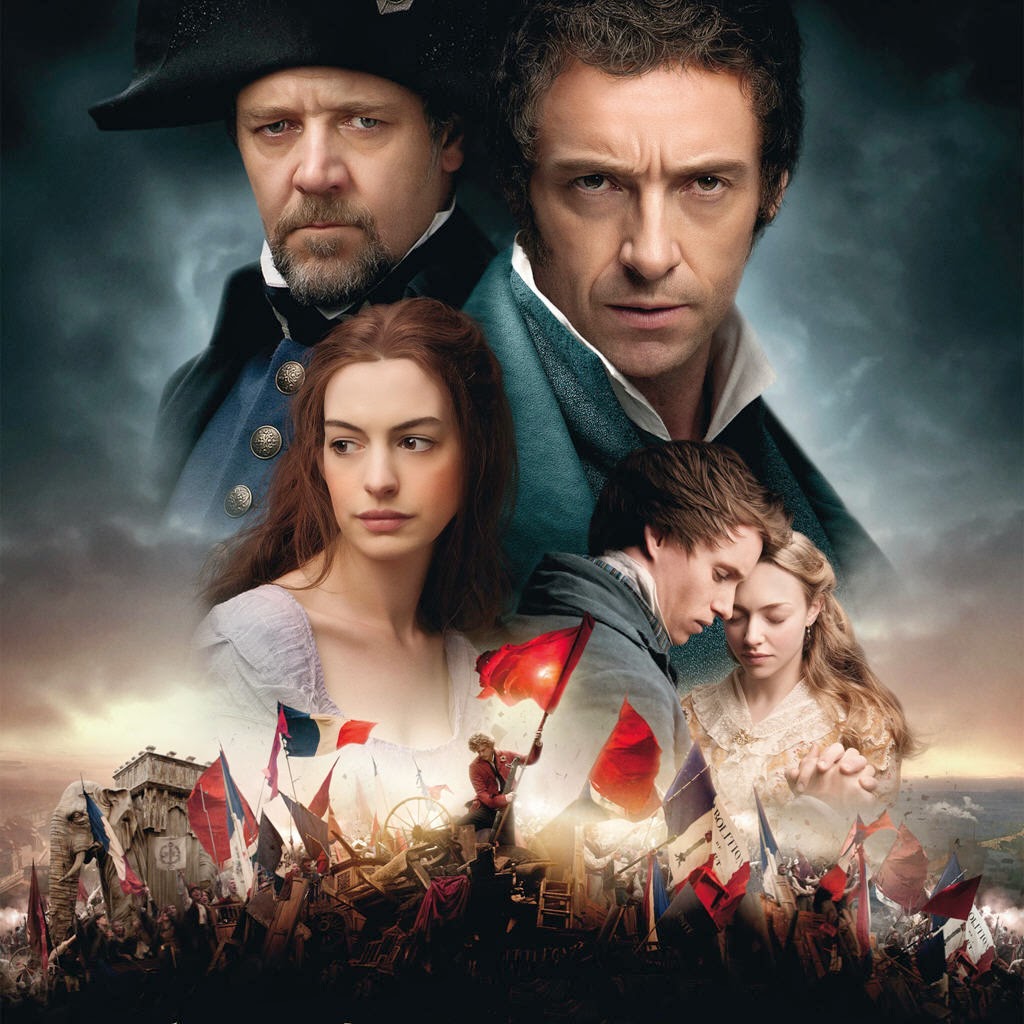
My first survey of characters will be from Les Misérables. I have read the book in French and in English (and have run into some truly terrible translations – but that’s a note for another time), have seen the musical umpteen times and watched one movie based on it. No, it wasn’t the one that came out in 2012. I heard Russell Crowe’s singing and decided to pass.
Les Misérables is a sweeping story covering about thirty years, starting in Toulon prison in southern France, and ending in Paris in 1832. It tells the story of the ex-convict Jean Valjean as he makes his way through his life, pursued by the relentless Inspector Javert, who first encountered him in the prison.
Let’s look at them all:
 |
| Missing the Villains |
Jean Valjean – the book might as well be named for him. I am surprised that it was not. A convict who served nearly twenty years at hard labor at the prison of Toulon, one of the big installations for the French Navy on the Mediterranean, second only to Marseille. Toulon was originally the base for the naval galleys, and they needed rowers. Hence Valjean. By the time the story opens, galleys are more or less passé. His original ‘crime’ was to steal a loaf of bread to feed his sister’s family. Continuing attempts to escape added to his sentence. He has learned that the justice system is anything but, and having paid his debt to society, he is nevertheless still treated like a criminal. He rebels. The book chronicles his change of heart, his change of fate, and his dealings with those who had persecuted him.
Javert – born in Toulon prison of a Gypsy prostitute and a galley convict, he was raised in the prison. For him, the only way to escape the prison was to join the police. He serves the Law. It is not for him to show pity; his concern is that the law is upheld. He met Valjean when the man was a convict. He has a long memory.
Thenardier, Monsieur and Madame – husband and wife team. They are swindlers, robbers, abusers. At the start of the book they are in a smaller town. By the middle of the book they are in Paris running a ring of hardened criminals involved in all sorts of crime. Their daughters are prostitutes (pimped by their father, apparently) and their brothers were thrown out on the streets.
Fantine –a young woman, seduced by a wealthy student and abandoned when she was pregnant. She entrusted her daughter to the Thenardiers to house and feed and love in exchange for a monthly payment while she worked in a city. They used the child like a slave. Fantine loses her position and everything else when her ‘shameful’ past catches up with her and she descends into poverty, prostitution and, ultimately, illness and death.
Marius – a wealthy student and lawyer, involved with some friends who have revolutionary notions, which he has embraced wholeheartedly. He tries to do what is best. He also falls in love with Valjean’s adopted daughter.
So, where do they fall? Here is my take:
So, where do they fall? Here is my take:
Protagonist: Can you guess? Jean Valjean. The book follows his progress and the obstacles he encounters.
Hero: Jean Valjean again, no surprises. In addition to being the protagonist and main character, he is a very good man, the epitome of a ‘hero’. His wholehearted turnaround to embrace his own reclamation is the watershed moment of the book. Everything after that serves to challenge him and illuminate the way of goodness and heroism for him: This song, where he hesitates between speaking the truth and returning to prison or keeping silent and allowing another to suffer: Who Am I
He is true to form right up to the moment that he frees the formidable obstacle that stands between himself and a happy old age, and that is his …
He is true to form right up to the moment that he frees the formidable obstacle that stands between himself and a happy old age, and that is his …
Antagonist: Javert. He serves the law, and he is as unbending toward his own infractions as he is toward anyone else’s. His focus on the letter of the law makes him determined to bring Valjean to justice. In the play he seems to have a touch of religion and poetry (which gives us the splendid song Stars,
which hooked me for life).
Javert is one of literature’s most famous suicides, and the cause of his self-destruction, after his rescue by Valjean, who had every reason to wish him dead, has been argued up and down for years. I have my own theory…
which hooked me for life).
Javert is one of literature’s most famous suicides, and the cause of his self-destruction, after his rescue by Valjean, who had every reason to wish him dead, has been argued up and down for years. I have my own theory…
Javert is the antagonist. Is he a villain?
Not at all.
Not at all.
Javert was one of the obstacles that Valjean had to overcome. Javert’s actions are nicely summed up in Valjean’s song when he frees Javert, who had been sentenced to be shot as a spy:
“You are free, and there are no conditions,
No bargains or petitions.
There’s nothing that I blame you for.
You’ve done your duty: nothing more.”
And – going a little apart here, Javert’s suicide was his way of fulfilling the law after seeing that there is something greater than the letter of the law and his duty. The Law required that a lapsed parolee be returned to Justice. Valjean had shown himself to be a good man. The only thing that stood between Valjean and freedom or, if you like, the thing that would return Valjean to the galleys was Javert. So Javert took himself out of the equation and allowed a good man to go free. An antagonist, and an admirable man. Not a villain.
(The singer here, distinguished Australian actor Philip Quast, handles this difficult song beautifully. Javert’s Suicide) If you are a fan of fine singing, there are two passages, one starting at 2:34 and one at 3:53 that are simply breathtaking.
Villain: The Thenardiers win this hands down. They stink and squabble, murder and corrupt through the entire book. In Paris they control the crime in part of the city. Torture, murder, kidnapping, robbery, prostitution – they do it all. In the musical they are humorous… Until you listen to one of their songs, here: Dog Eat Dog
Nice person: Fantine.
Nice person: Fantine.
Jerk: Marius. A good many people who watch the musical want to thwack him with something firm because he seems rather spineless and moons about like a doofus. In the book he achieves ‘Jerk-ness’ (just ask Javert) when he sees Valjean leading Javert off to his supposed execution. He had had dealings with Javert, and had some hazy notion of maybe speaking up for him. The sound of the shot puts an end to that muzzy train of thought. And for the rest of the book he looks oddly at Valjean for having executed the spy, as he thinks.
Let us remember that Marius was participating in an armed insurrection, firing upon government troops, inciting riot and revolution and rebellion and other such things. In this case, he is the pot calling the kettle black.
Summary:
I have run into a lot of people who have trouble not equating ‘Hero’ with ‘Protagonist’ and ‘Villain’ with ‘Antagonist’. As we have seen here, they are not necessarily the same. By the same token, the male romantic lead can be an utter jerk, like Marius. Or, at least, a spineless ninny who is prone to fuzzy thinking and snap judgments.
My next post will deal with Richard Adams’ book, Watership Down. Heroes, villains, deus ex machinae, prophets – you name it. And it is about rabbits!
Summary:
I have run into a lot of people who have trouble not equating ‘Hero’ with ‘Protagonist’ and ‘Villain’ with ‘Antagonist’. As we have seen here, they are not necessarily the same. By the same token, the male romantic lead can be an utter jerk, like Marius. Or, at least, a spineless ninny who is prone to fuzzy thinking and snap judgments.
My next post will deal with Richard Adams’ book, Watership Down. Heroes, villains, deus ex machinae, prophets – you name it. And it is about rabbits!
Insecure Writer’s Support Group
 Today is the first Wednesday of the month, which means it is IWSG day. The once-a-month blog hop started by Alec Cavanaugh . IWSG = Insecure Writers’ Support Group (click the words to visit)
We share our insecurities and support each other with empathy, sympathy or practical suggestions.
Today is also the second day of the A to Z Blog Hop (which I am enjoying, but not participating in because I have a whole lot of other things that I have committed to including finishing an installment of a trilogy by Christmas, participating in Camp NaNo, working (my job keeps me busy) and other things.
This month I will share a graphic that expresses beautifully, at least for me, a writer’s reaction to someone who:

- doesn’t ‘GET’ your work.
- insists on saying so
- tells everyone you are a writer
- tells everyone how many books you are selling (and they have no idea of the number)
- insists on sitting you down and telling you how the thing should have ended
- gets miffed when you take a half hour to write
- tells you what you should write so that you may make money
What do you do?
DEVELOP A THICK SKIN.
This is a blog hop with lots of good participation. Go forth and read!
http://www.linkytools.com/basic_linky_include.aspx?id=103850
Shades of characters – Introduction
It is A to Z time.
Until two days ago I was thinking very hard about participating, but I concluded that this year I would have to sit it out as a poster. I am trying to meet a deadline on the second installment of a trilogy, work is hectic and I’m tired.
That does not mean that I won’t be enjoying it. I will be reading and cheering and clicking and commenting and following during the A to Z blogfest.
Instead of my participation, and well aware that I will be lost in the wave of awesomeness that I plan to follow, I decided to bow to an urge I’ve felt for a long time and begin a series of regular posts on a subject that I have always enjoyed:
Heroes—Villains—Protagonists—Antagonists—Nice guys—Jerks
What are they? And in any given work of fiction or, for my purposes, in a movie, who is which? We tend to blur things.
We have definitions of all these: (from Merriam-Webster Online. I wanted to use the Oxford English Dictionary, but $295 per year for a subscription was not do-able). I will follow them in my series of posts. I will say right now that ‘hero’ encompasses male and female, as does ‘villain’.
Hero:
a person who is admired for great or brave acts or fine qualities
the chief character in a story, play, movie, etc.


Villain:
a character in a story, movie, etc., who does bad things

Protagonist
1 the principal character in a literary work (as a drama or story)
a leading actor, character, or participant in a literary work or real event
Antagonist
one that contends with or opposes another : adversary, opponent
Nice guy
think vanilla and good as gold.
Jerk
an annoyingly stupid or foolish person
an unlikable person; especially : one who is cruel, rude, or small-minded
It’s a subject I enjoy. I have some questions whose answers should be amusing:
- Can one be a hero and yet a secondary character?
- Can one be the protagonist and yet be a villain?
- Can you have more than one hero?
- Does a villain have to be a jerk?
- Are antagonists necessarily villainous?
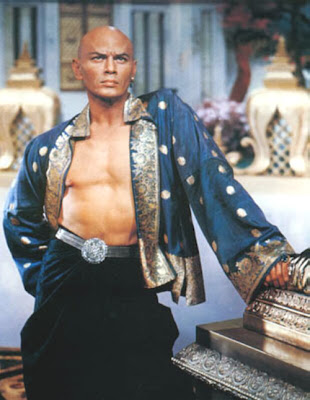
As the King of Siam might say, Is a Puzzlement:
I’ll explore those in my posts. I think it will be fun. Will I use my own characters? Probably not. Drooling is so unappealing.
My first in the series will be Wednesday, April 2.
Portrait of a Hero…
It’s always hard to express a character, whether hero, heroine or villain. A writer has a picture in her own mind, but readers have their own ideas. Whose is valid? Whoever is expressing the picture, of course.
 |
| My hero??? |
I wrote some quasi-heroic fantasy years ago that involved a group of people who looked rather like Thor in the Marvel Comics. Tall, blond, bright blue eyes… I had a hero that some folks (not me) considered a heart throb. So, out of idle curiosity, I asked who he looked like.
‘Bjorn Borg!’ sighed one friend.
Oh…kay… I said. Others had other notions, leaning toward the tall and stringy.
And so it goes.
I’ve been working on the covers for The Orphan’s Tale, a trilogy set in 1830’s Paris. Book I is out. Book II will be out, God willing, around Christmas. Book III will be next year. They have developed simultaneously.
The covers have the same theme: a scene of Paris with a portrait of a main character inset in the upper left. The Heroine, Elise, graces Book I. The heroic young boy, Larouche, is on Book III. So… Who is on Book II?
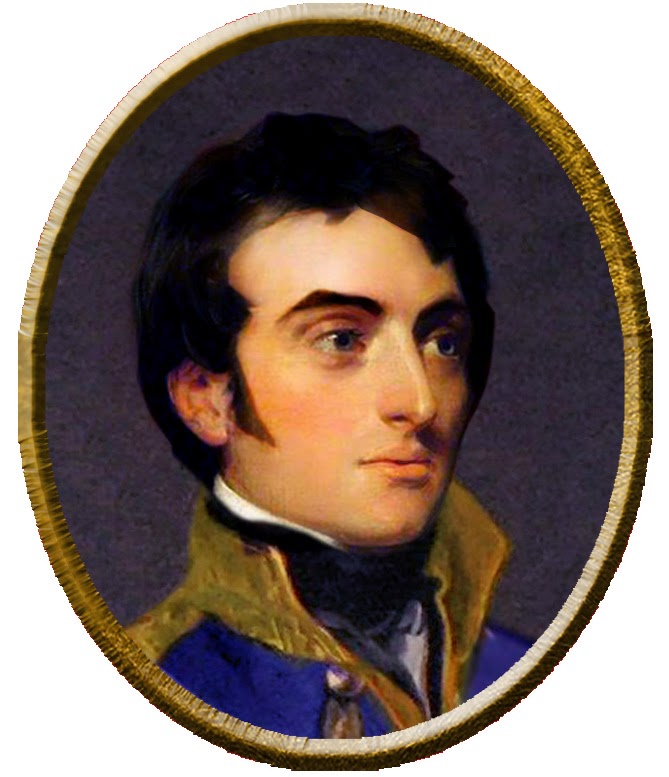
Therein lay the problem. Obviously, the hero, Paul Malet, who has an interesting past and is a very enjoyable character to write about. But what on earth does he look like? Tall, yes. Dark-haired and hazel-eyed. Graying around the edges (he is in his forties). Military – he fought in Napoleon’s armies as a colonel of artillery. That much was described. The rest? Well, it’s in my head,
…but I needed a cover, and soon.
So I went through the portraits of the era, sifted through the works that are in the public domain. Two seemed to work, partially. I combined them, adjusted the coloring and the uniform, and now am happy to present, for the cover of the book, Paul V. Malet, the hero. I was not able to capture the sardonic lift of the eyebrows when he encounters stupidity, but the tolerant smile is there. It’ll do.
…and now I have the three covers:

Here’s the page on my website: http://www.dianawilderauthor.com/the-orphans-tale.html
Let Me Entertain You… Please…
I like telling stories. Forming and telling stories is what makes me tick. I see things, think of what lies behind them and what lies before them in the future, and from that I come up with stories. It sounds strange when I phrase it like that, but it works that way for me, as I posted here.
We write our books (most of us) to entertain people. I am still blown away when I see that someone shelled out cash to read something I ‘made up out of my own head’, but maybe that’s just my oddness. Our creativity is fueled by everything around us – whether stories our grandparents told us or myths we have heard or things we have read.
Arthur O’Shaughnessy put it interestingly:
We are the music makers
And we are the dreamers of dreams,
Wandering by lone sea-breakers
And sitting by desolate streams; –
World-losers and world-forsakers,
On whom the pale moon gleams:
Yet we are the movers and shakers
Of the world forever, it seems
I am not sure that I would call myself a ‘Mover and shaker’ so much as an observer and reporter and ‘what if’ er. I watch the world move past me, I catch glints of thoughts and I find the stories. And I tell them. I can’t help it: it is what I love to do, and I can no more not weave stories than I can stop breathing.
Everyone has something singular about him- or herself. We are not all built the same, but we all have something that touches us, that makes us shine, that brings us to action. Perhaps the hardest part (for me) is not to share this quirk, if you will. It is rather like having a gift and wanting to give it, hoping that those who receive it will enjoy it and – somehow, some way – be strengthened or refreshed by it.
 |
| Listening to Poetry |
I remember speaking with some others like me. One fellow said that if people would only listen to him, trust him with their time, and let him entertain them, he would do it for nothing. I remember nodding. I understood him.
But then someone else spoke up and said that, well, what was the point of doing that? After all, there was ‘nothing to be gotten out of it’ that way.
I agree that no one should ever be sold short. If you are producing something that people are willing to purchase, well and good. Some things, however, go beyond buying and selling, and the pervasive ‘what’s in it for me?’ mindset troubles me. And I am encountering it more and more frequently in my own area of joy.
When will I start seeing money? What do I need to do to get more sales? Why aren’t people buying? What are the contacts that I need to start selling? Well, if people are reading this sort of work, then I guess I’ll have to write it!
I am not saying that it is wrong to sell your work. I am not saying that it is wrong to seek ways to find more exposure, to make yourself known to others, to make your offerings available to more people. There is nothing at all wrong with sharing, and there is much that is right about being paid for your hard effort, but I sense a serious disconnect or, perhaps, an area that has not been thought through.
Someone said, “If I can’t make any money, I don’t see any point in continuing.”
Is the measure of the worthwhile nature of an activity the amount that people are willing to pay for it? In that case, I know of a great many athletes who might as well take up a seat before the television set and forgo their archery practice, golfing endeavors or horseback riding because they will never win The Masters or star at the Devon Horse Show’s hunter/jumper classes. They aren’t ever going to be asked to endorse anything in exchange for money.
 |
| What price agony? |
And what of the singers who do not sell their recordings? Singing for one’s own enjoyment or the enjoyment others is surely not pointless if others are enjoying it. Causing agony is another matter and should be addressed as it comes up.
But what of ‘the fire in the belly’ that makes me, at least, burn to bring my characters to life, to share them with others, to enjoy their antics and be touched by the things that they have done. I am at this moment about to quickly jot a scene where one character, a man with a difficult childhood who discovered the constellations in the night sky, tells another man who is despairing and somehow has fixated on the blackness of the night as a sign of his own despair, that “the stars are there – right there! – behind the clouds. Cassiopeia, The Swan, Orion – all are there, as they have always been. Trust that they are and don’t rely only on your own sight. I swear it! There is never any need for despair! I promise you– I promise you!”
No one else will read it. But I must write it. Every little bit of joy must be savored…
Celebrations – March 21, 2014
Time to celebrate the things that go unnoticed!
VikLit had the idea for this Friday blog that celebrates the small things that often go unnoticed. I often read the posts and reflect that I had never noticed the things baing mentioned. Once I see what they are, I find myself celebrating, too.
Join us! Details are at the end of this post.
Today is the first full day of spring. We all remember spring, don’t we? Especially after such a dreadful winter as this has been?
The season of sprouting flowers, of flotillas of Canada geese and songbirds returning home… I heard birds outside my window after the silence of winter, and I smiled.
Down south (in the US) the magnolias and azaleas are beginning to bloom. I remember strolling beneath Spanish moss-festooned branches and filling my sight with magenta azaleas.
I am also celebrating morning tea. Usually slightly sweetened and well-milked. I drink two or three cups each morning. It’s especially good when I remember to drink it while it is hot.
What else? the cold is easing up, but I can still enjoy a fire. There is something about watching flames that speaks of comfort and celebration. It does help if you are not cursed with the ability to put out any fire you encounter, even if it is begun with gasoline and dry pitch pine. I have several acquaintances with that ability.
And another celebration – all of you . It is good to read what is posted and see smiles through your eyes.
Fanfiction, Formal and Otherwise
I went to a performance of Les Miserables back in November of 1988. It was election day, and my two companions were coworkers who had become good friends. One of them was a staunch conservative, the other a rabid liberal. Both were delightful. The show was now on tour and we decided to go together after enjoying a good supper in Philadelphia.
It was a wonderful evening, and a bit of a landmark. For the first time my two friends agreed on something political: I had told them that evening that I had written in Lyndon Larouche for president. Naturally, I had not, but the look of horror on their faces was fabulous and I chuckled until the curtains parted and I was plunged into Les Miserables.
This was the first time Les Miserables (‘Les Miz’) had been on tour, and the cast (I now know) was top quality. I knew the story, somewhat. I watched, enthralled, as Jean Valjean rose above his unfortunate past as Inspector Javert, determined to bring him back to justice, followed hard on his heels.
The songs were splendid, but best of all was the truly poetic song sung by the Police Inspector, Javert. Stars… (here in French) and a video below in English, where someone took Russell Crowe’s acting and matched it with Philip Quast’s singing:
I had read bits and pieces of the book over the years, and had not been particularly impressed. That evening, though, the story of revenge, mercy and redemption caught me. I bought the book and read it in English and then in French, prepared to love it.
Instead, I was chilled. The story had a grand scope, there were so many memorable
 |
| Image copyright Nyranor at DeviantArt |
characters…but it also had a serious disconnect, quite apart from the truly terrible translation from French to English. The characterizations did not ring true (to me) throughout the story. Valjean, completely admirable from the moment of his conversion through to his magnanimous gesture to the man who had hunted him down through the years, became a wet rag at the end.
And the character of Javert, the cop – Why on earth would the man who sang such a magnificent, poetic song in the play be the same fellow in the book who throws himself into the Seine after having been shown mercy? It did not make sense.
Looking back over a quarter of a century I realize that the theme of the musical was taken from the book – and then severely edited. They improved on the book (not a hard thing to do, in my humble opinion) and took a different direction.
That left me, the writer, thinking ‘What on earth went wrong? That shouldn’t have happened! Why would Javert throw himself in the Seine? He was saved!’ Temporary insanity, brought on by nearly twenty-four hours of combat and captivity, in fear for his life, in the middle of a riot, most likely. Combat fatigue. And…dare I say it?…Javert wasn’t the brightest bulb on the tree. Nor was Valjean, based on the way the story ended.
Pooh! Just for the fun of it, I decided to rewrite the ending. I enjoyed it, but the characters did not work. Characters are living things in your mind, and they change until they fit. I had tremendous energy at that time. I was also not on the Internet, and I had not yet discovered Facebook and the other distractions that make the writing of a chapter a struggle at times. I wrote hundreds of pages, scrapped them, rewrote them. Characters entered – one in particular – took over, and after three years all vestiges of Les Miserables were gone.
I was laughing about it with a friend not long ago. She had been in on the original story from its very beginning, and she wasn’t shy about saying ‘That stinks!’
“Well,” she said, “You started out writing FanFic, and it took on a life of its own. The original story is gone now.”
That made me blink. FanFic? Me writing it? Really?
I had to break out the dictionary to see just what it was.
<>
That much I knew already. I also knew that Fan Fiction based on a copyrighted book could not itself be copyrighted or sold by the author, since it was a derivative work. Works in the public domain like Les Miserables, Sherlock Holmes, or the various works by Jane Austen, were fair game. A visit to DeviantArt trying to research some images led to links to Fan Fiction based on Les Miserables. Some of it improved a great deal on the story. But some of it was truly poor.
I was interested to see, though, that almost all of the Les Mis FanFic centered around the Inspector having a change of heart, being fished out of the Seine, nearly drowning but being rescued – or such like – and becoming Jean Valjean’s friend. The disconnect was repaired one way or another.
Was there other FanFic out there? Indeed there is.
Fifty Shades of Grey originally involved Bella and Edward from the Twilight Saga. E L James removed it from her FanFic site and changed the characters’ names when people commented on the sexual nature of the stories. Stephenie Meyer said that that genre was not for her, but expressed congratulations that James was doing well.
The original story on which the Fan Fiction is based is known as ‘The Canon’, and departures from it are generally noted. Changes are called ‘revisionist’. The Seven Percent Solution is Sherlock Holmes Fan Fiction, and it certainly revises and expands on features in the stories.
 |
| “Good heavens!” she gasped. |
I stumbled on some Pride and Prejudice Fan Fiction involving Mr. Darcy and Miss Bennett stranded in a little cottage during a downpour and improving the idle hour. I must confess that I didn’t read much of that. The sight of Lizzie Bennett and Fitzwilliam Darcy in the throes of illicit and damp passion was a little startling, especially since the story seemed to imply that they had been doing it for quite some time.
I backed out of the Amazon preview, had a hearty laugh, and went off in search of another Austen novel. I wonder what Jane would have thought of that one particular FanFic.
Some of it is beautifully written. This FanFic, for example, involving Javert at the barricade and the fate of Gavroche, the urchin.
A number of the Austen spinoffs are beautifully done.
And some are purely wretched. Some, especially dealing with novels written a century or so ago, are full of errors that make any historian cringe. In a piece of Les Miserables FanFic I was interested to see that the recuperating inspector – Javert – was given a pair of pants sewn for him as well as some freshly knitted socks. I devoutly hope and pray that the good Inspector found that the trousers (or pantaloons) were a good fit, and that the stockings, reaching to knee height, were not too baggy.
So long as copyright laws are honored and an author has a say in what is said or done about his or her novel, I think it can be a good thing. It certainly indicates that characters and situations in the original stories are hard to let go. Or that the story had a problem that needed to be fixed.
…or something.
Cataclysm – By Inge H. Borg
I have the pleasure to announce a new book by Inge H. Borg, whom I interviewed here. Her latest in the Winged Scarab series, is now available (see below). A good writer and a lovely person, she is sure to please:

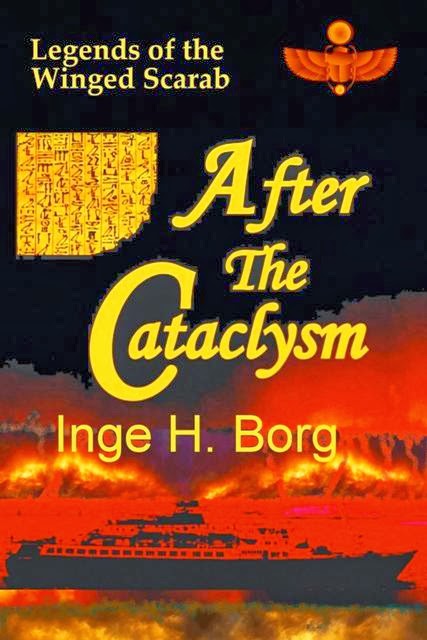 Inge H. Borg’s Book 3 of the Legends of the Winged Scarab series is a dystopian action/adventure that stands alone. However, readers would benefit from having read at least Book 2 – Sirocco, Storm over Land and Sea, whereas Book 1, Khamsin, the Devil Wind of the Nile, is a complete stand-alone with only its artifacts bridging it to its two sequels.
Yellowstone Supervolcano explodes. A ghost ship, the abandoned real Lyubov Orlova, becomes a floating battleground between protagonists from Sirocco, Storm over Land and Sea, Book 2.
After the Cataclysm, Book 3 of the Legends of the Winged Scarab series, a dystopian action-adventure novel, plunges straight into this desperate post-apocalyptic world.
Egyptologist Naunet Wilkins and her scientist husband Jonathan flee their lawless homeland, accepting an uneasy offer from Egyptian archaeologist Jabari El-Masri, a fugitive from his own country. He was given refuge on Venezuela’s Isla Margarita, owned by the fanatic art collector Lorenzo Dominguez. Did El-Masri barter his Golden Tablets and the expertise of his American friends for his own exile?
Once again, Naunet is torn between translating the ancient curses for the ruthless South American billionaire, and saving her future world from the dire prophecies.
As another ill-wind blows, she finds her answer.
* * *
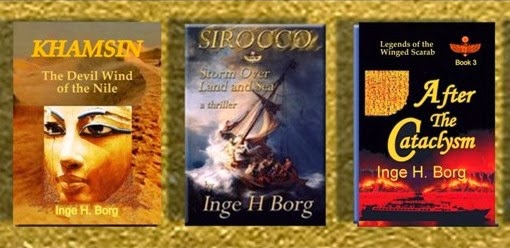
All of Borg’s books are available in e-book format as well as in print. Read more about them on the following:
Inge H. Borg – Author Pages
https://www.smashwords.com/profile/view/505050 – Smashwords
http://www.barnesandnoble.com/c/inge-h.-borg – Barnes & Noble
http://www.goodreads.com/goodreadscomInge_H_Borg – Goodreads
Blogs:
Insecure Writers Support Group March 5, 2014
Today is the first Wednesday of the month, which means it is IWSG day. The once-a-month blog hop started by Alec Cavanaugh . IWSG = Insecure Writers’ Support Group (click the words to visit)
We share our insecurities and support each other with empathy, sympathy or practical suggestions.
One of the great joys of writing is the feeling of ideas flowing, thoughts coming together, racing through your fingertips onto the keyboard and into the manuscript, flooding the pages. It’s as exhilarating as careening down a snowy hill on a sled, or putting a horse at a jump, knowing – just knowing – that you can’t miss.
 |
| Tetris |
You are the ruler of the universe, the spinner of stories, the Tale-Teller, the Seannachie – you can hold people spellbound… Well, you can hold yourself spellbound at any rate… Those are the moments, rather like Runner’s Euphoria, that buoy us up and keep our fingers tapping on the keyboard.
…but then there are the moments, weeks, months, maybe years, where you squeeze out a chapter here and a chapter there, and it is like trying to squeeze the last bit out of a half-dry toothpaste tube. And just about as enjoyable. You know you want to write, but you find that you can’t write. Or else that the joys of Tetris far outweigh the joys of putting words together.
 |
| …creeeeeaaakkkk… |
You sit there about as useful as a rusty old water pump. Lots of creaking and no juice.
What to do?
I attended a small writer’s conference years ago. The first I ever attended. I got a lot out of it, and I still have my notes. Talks about characters, about where to get ideas, a funny chat on surreptitiously writing things down on napkins in restaurants. Someone asked this particular speaker how he worked through writer’s block. His answer, completely serious, was unexpected based on his talk up to then.
He said,
“I can’t afford to have writer’s block. If I don’t write, I don’t get paid. So if I hit a stone wall, I write through it. Anything. If it’s a scene, I mock something up. But I write and move on. I don’t let myself get stalled. Once I get my momentum up, I can always turn around and fix what I did. But I don’t have the feeling that I am somehow stopped.”
 It’s a good thing to think about. At the moment I’m a rusty pump. Frankly, I think I have a slight case of burnout, since I am working on a story that had been fixed in my mind for a long time. I was familiar with it, comfortable with it – but suddenly I was seeing ways that the plot could go, sidelights to the main character’s history and personality, new ways to deepen things – and I was simply tired.
I may take a day’s break. Or not. I may just plow through. Write even if it’s just 700 words of my notes to myself about what I think might be happening. Just write.
…Like I said before, without insecurities, would we be real writers?
Hm…
This is a blog hop with lots of good participation. Go forth and read!
http://www.linkytools.com/basic_linky_include.aspx?id=103850
 dianawilderjottings