Sorting Through Boxes…


…I received quite a blast from the past.

This was lying demurely folded in a box of photographs.  It is not the first manuscript  I copyrighted. That honor goes to a Heroic Fantasy Trilogy that is so utterly silly, it will never see print.  Besides, I’d have to retype it.

This one has some sentimental and ‘lessons learned’ associations.  It was the first manuscript I sent around for representation, and I worked for a year with one agent (a very good one) polishing it.  Ultimately, he turned it down and I went with another agent who wanted to represent me.  www.pred-ed.com did not exist then. 

Amazing what you find in boxes.

The first copyrighted manuscript that I published was A Killing Among the DeadThat one came out in 2011.  this one (part I) was published last year.

25 years ago for the copyright on this.  And boy was it bad!

It’s pretty good now, and Book II is coming along very well.  Book III is nearly ready to go this very moment.

I have the three covers designed.

…And now back to writing… (and staying away from boxes)

Small Celebrations – June 6, 2014


Welcome to Friday and the weekly blog that Vikki at VikLit thought of well over a year ago.  It is a way we pause to celebrate the small things that together make our lives richer.  Reading the posts over the months will open your eyes to the many, many ways we touch delight and celebrate it.  The hop is still open if you want to join, and it has drawn a wonderful group that posts, remembers, celebrates and just generally supports and cheers you on.
.here are lovely people involved in posting, remembering, celebrating and being just generally awesome – rather like yourself, don’t you think?

The information on the hop is below.  Why don’t you join?  Or, at least, visit the various posts and smile.

…And today I am celebrating…Books!

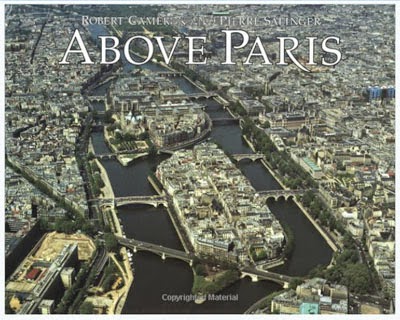
I just ordered two books yesterday.  One of them is to replace a book that I had, that was lost during four moves.  It is a sourcebook and a picture book (don’t get me started on picture books…)  It is a collection of aerial photos of Paris, taken from close(r) to the ground.  This was done after years of negotiating with the French government, which does not allow flyovers.  One day was granted, and this book resulted. 
It was very useful, since I could visualize the buildings, see the terrain.  Besides, I loved my visit to Paris, and if I ever win a lottery or inherit an emerald mine, I will go back and stay a year in an apartment near the Pont Neuf with three – count ’em! -bathrooms complete with soaking tubs.
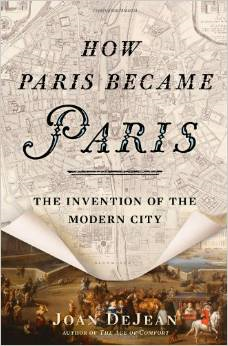
I ordered another book on Paris (I’m writing a story set there), and since it’s about urban planning (it is not polite to yawn), it should be good.  Besides, the sample I read rather thoroughly is beautifully written.
I ordered both of these in ‘hard copy’.  The first is a hardback.  It’s an oversized book, and they don’t do well in softcover.  The other is a paperback. 
I never got over my love for books.  The things you hold in your hands, the fresh pages that smell of ink or, if they are older, of library dust.  The dog-eared pages, the notes in the margin (mine), the tucked-in bookmarks that can be anything from a magazine advert cut out because it’s pretty or a receipt from some lunch enjoyed years ago.
I have an e-reader.  A Kindle Fire.  I bought my first Kindle under protest because while I am not a Luddite by any means, I don’t like to deal with something that might conk out in the middle of a page leaving me glaring at my reflection in a black screen and screeching “What is the matter with this blasted thing???  It’s gone black!  Gah!”  My friends and loved ones informing me in tones of sweet reason that shaking the thing isn’t going to help, nor is blunting the blade of the Navy cutlass willed to me by my father.


(I wouldn’t have done it anyhow.  I like the thing.  The cutlass, that is).  I will say that my review and corrections are being done, preliminarily, on my uploaded MS using the Fire.

But books have a feel, a sense of completeness.  If I hold my volume of Treasure Island (Stevenson) in my hands, I have a sense of holding the entire adventure between my two palms.  Jim Hawkins, Long John Silver (one of the most chilling villains I’ve encountered – and you never suspect him till the end), the parrot, Captain Flint, Captain Alexander Smollet, and the plague-ridden island.

You can hold a book, linger over it.  If you’re in the right place you can nearly bathe in it:

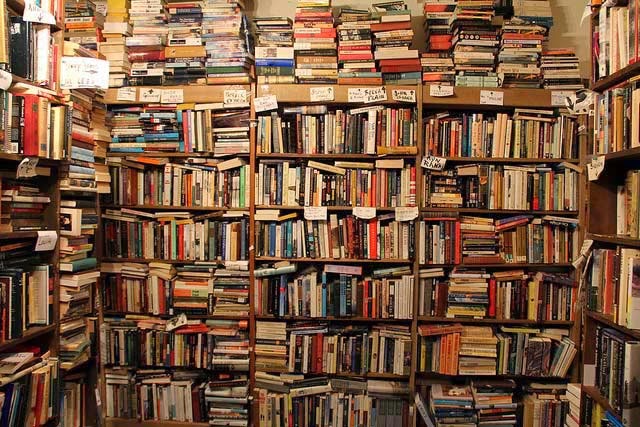
My library, such as it is, is not quite as palatial as this one, but the idea is the same.  I do have to dust it.  At least it is not as chaotic as this one:
Actually, that one might have a few too many books, and I’d be afraid that the shelves might come down.

Books are tangible in a way the electronic readers are not.  You can hold them, smell them…  Though I suppose that if an e-reader exploded there would certainly be a smell…
Hm.
You can mark them up.  (My ms is marked up.  Little yellow squares with little blue boxes.  If I click on them successfully, up come my notes.  they *are* handy, but oh so unromantic.  Rather like emails instead of handwritten letters.  Written in fountain pen.  I am told, though, that my letters are eternal because they are hard to read.

But I digress.  I do like the fact that I can indulge my terror of being left without something to read but not wanting to do damage to my spine by trundling along a suitcase full of books simply by bringing my e-reader.  They have their uses…

This poem expresses it well:
 

“Who hath a book

The parking garage for the Kansas City public library
Hath friends at hand,
And gold and gear
At his command;
And rich estates,
If he but look,
Are held by him
Who hath a book.


“Who hath a book

Hath but to read

And he may be

A king, indeed.

His kingdom is

His inglenook-

All this is his

Who hath a book.”  


― Wilbur D. Nesbit


http://www.linkytools.com/basic_linky_include.aspx?id=179014

Pulled In Different Directions IWSG June 4, 2014


Welcome to the first Wednesday of June, IWSG day.  This is the once-a-month blog hop started by Alec Cavanaugh . IWSG = Insecure Writers’ Support Group .  We share our insecurities and support each other with empathy, sympathy or practical suggestions. 

Pulled in Different Directions

There is a saying in academic circles: publish or perish.  In other words, if you are a professor and you wish to be taken seriously and have your career blossom, you had jolly well better write something that is published and met with acclaim.  So (in academic circles, or at least the ones I am familiar with) you see a lot of scrambling and panic and despair if the proposed publication does not somehow make the grade. 
       I have heard time and again that in order to be read, a writer must write.  This is not as simple as it sounds, at least to me.  It is taken to mean that a writer must present his or her reading public with a steady stream of writings so that, one book being devoured, another is ready to be savored. 
       People have contacted me recently and asked when the second and third books of a trilogy will be published.  This is a tremendous compliment, and very gratifying, but it introduces a sense of urgency, a sense of ‘time’s a-wasting’.   
(‘I’m in a hurry to get things done, so I rush and rush until life’s no fun.  All I’ve ever got to do is live and die, but I’m in a hurry and don’t know why’ [Alabama])
So what do you do?
In my case, faced with the thought that my last work was published in October of 2013, I scrambled to get book II of the trilogy ready.  It was blocked out, it had some good flow to it.  Book III was better, longer established. I had realized that the story had a center part between Volume I and what had originally been Volume II, and it needed to be developed.  I started it in earnest six months ago, working on an old timeline. I set a December publication date.  I plotted and pantsed and typed and went over and over what I had, and then I sat back and took stock.  The story was there…and it wasn’t very good.  It was exhausted, stale.  The words were there, the thoughts were there, but writing that book was like trying to run up the side of a sand dune.  Forget the thought of dancing.
I know my own (current) capabilities.  I knew I could bring it in by December.  But at what cost?  My own exhaustion, certainly.  Worse, that stretched, dry, rushed endeavor would be a waste of my readers’ time.

The projected work, elegant in its concept…

They wanted to know what happened to a specific character.  Book III brings a very satisfying resolution, with a lot of adventure, suspense and laughter along the way (he’s that kind of kid).  But people would have to slog through Book II before they hit that resolution.   And that was where the problem was:  If a reader was opening Book II and expecting something like this:

How could I possibly even think of producing something like this?

Finished in a hurry…  Sort of.  Happy author?  Uh, no…

The fact is that I couldn’t. 

And that led to a revelation that should not have surprised me.  I can’t put out something that is consciously hurried.  It is an insult to the story and to the reader to withhold my best effort.  And – let’s admit this – it is disrespectful to our own talents and abilities not to endeavor to produce our very best.

Yes, the passing years will (I hope) bring improvement.  Something I wrote twenty years ago, that made me happy, may not be satisfactory now that I have lived and practiced and grown those twenty years.  But at that time it was my best.

So what is going on with Book II?

I contacted my editor and told him that it would be badly rushed if I pushed for a December release.  (He agreed.)  I took down any mention of the projected December date.  I took a deep breath, uploaded a mobi version of the working manuscript onto my Kindle and started adjusting it.  Tweaking wordings, contemplating the possible plot passages…  Opening myself to the luxury of writing an excellent story, fit to follow the first and lead to the third.

I have something small and fun that I can polish in my spare time and put out in December.  A fable that children and happy adults might enjoy.

And I can savor creating something beautiful.  That is, after all, what we writers live to do.  Isn’t it?

Check out the hop.  There are some fabulous, unhurried posts to savor:


http://www.linkytools.com/basic_linky_include.aspx?id=103850

Parisian Encounters – of Cops and Angels


Sometimes reality and mystery intersect in strange ways.  Things that seem unlikely or impossible become probable and likely.  We touch mystery and the sublime as we walk through our lives, and sometimes – but only sometimes – we stop to take a closer look. 

I had an encounter once that on the surface was certainly of this day and age.  I was nearly mugged, at the very least, on a back street in nighttime Paris.  But the echoes it stirred some weeks later spoke of something a little different.  My imagination?  Probably.  I have one, after all. 

I am writing the second book of a trilogy set in 1830’s Paris.  The idea came to me suddenly after listening to music.  Ideas come in odd ways, and when you unravel them, you often find your way to a story, as in this case.

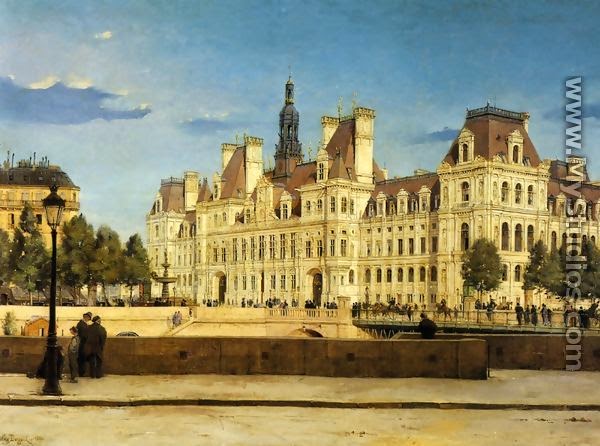
Paris is a hard city to research.  It has charmed people for centuries, but those who seek to know of its physical properties prior to 1860, let us say, are going to run into trouble.  The wide, spacious boulevards that we stroll along, that we see photographed and painted, were sent lancing through the heart of the old city by Napoleon III in the middle of the nineteenth century.  Prior to that, it was a medieval city with crowded, colorful, twisting streets. 


I did not know this when I started writing The Orphan’s Tale.  I solved the problem by making it Alternate History (from a geographical standpoint). 

In those early days I pored over maps, purchased books with illustrations of the different arrondissements, with photos from above, all giving me an idea of the area.  I became very familiar with the streets of the city, which was not necessarily a good thing. 

I arrived in Paris in the late evening of a Monday in May.  The manager at my hotel, after giving me a far nicer room than I had reserved and paid for, told me where I could go to find a nice sandwich for dinner. (“Un crocque Monsieur, Mademoiselle? Bien sûr! You will love it!). It was along the Rue de l’Opera.  My Hotel was near the rue St. Honoré, which parallels it. 


Avenue de l’Opera, Evening

Since I was arrogant enough then to think I knew the area very well from reviewing maps, I knew that I could cut out a dog-leg by following  a street that connected those two major thoroughfares. 

The detour looked fine on the map, but I quickly realized that it was little more than a dark alleyway. My instincts told me to turn around and go back, and I don’t generally ignore them.  As I was about to obey them, three people stepped in behind me, sending my sense of alarm soaring. I now had a very bad feeling. 
What to do?  Turn and face them?  To what good?  It was a high-sided, dark alley.  I was one person and there were three.  I chose to increase my pace.  I was wearing shoes called ‘City Walker’, made for walking in urban areas and styled like high-heeled pumps.  After some years of ballet, I was comfortable in heels.  I walked faster. 

Their pace increased. 

I sped up, myself.  I can walk very quickly, and at this point, with the adrenaline pumping through me and all my senses alert, I was going at a fast jog while not breaking out of my step. 

They increased their pace.  And now the alarms were sounding in my head.  

Half a breath and I was ready to break into an all-out run.  I could see the Rue de l’Opera ahead, not close, but within reach, and if I was ready to scream— 

I drew abreast of a small alleyway and out stepped a tall, strong-looking police officer. Not a Gen d’Arme with the little, beaked, flat-topped hat and the cape, but a municipal cop with a very stern look to him.   He stepped right into the alleyway, hands clasped behind him, and fronted my pursuers, who scrambled to a halt, turned and ran. 

I said “Bonsoir!” rather shakily, my heart thundering in my ears. He smiled faintly and bowed. 

At that moment I had the strangest feeling as though Saint Michael had stepped in to take a hand.  

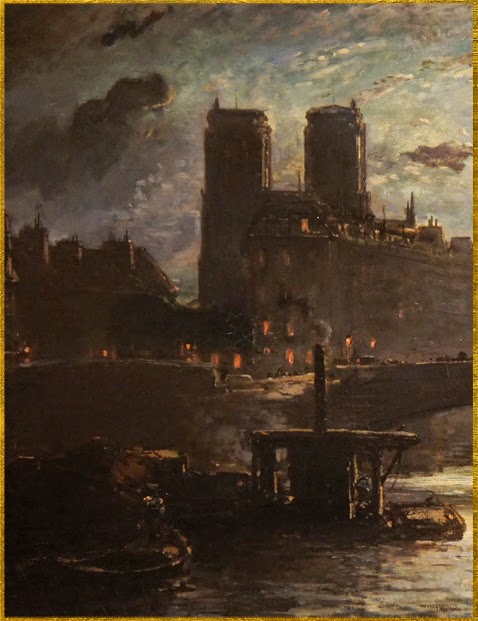
The rest of my stay in Paris was notable for its beauty and my enjoyment, aside from the moment I realized that I was clicking photos in the Cathedral of Notre-Dame in the middle of mass.  (It is a huge structure, and I was not paying attention to the French words).  I realized my gaffe, capped my camera, sat down, and enjoyed the service. 

The Fontaine St-Michel, Paris

I mentioned my near-mishap to a friend, who said “You do know that Michael the Archangel is the patron saint of Police, don’t you?”  

That made me blink.  No, I hadn’t. 

I’m not one of those wifty types (no more than any other writer) and I know what happened: he probably heard the sound of footsteps, realized what was going down, and stepped out to intervene. I think I would have been mugged at best if not for him. 

It is strange how trains of thought will alter your conclusions.  I do know that at some point, some time in the future, I will face that man and say (in French, bien-sûr) “Thank you.  You saved my health, at least, then.”  And it may just be that he will sheathe his sword and say, “It was my pleasure, Mademoiselle.  I trust you enjoyed Paris…”


Celebrate May 30, 2014


It is time to celebrate again (wonderful how celebrations come on each others’ heels, isn’t it!).  This lovely Blog Hop is the idea of Vikki at VikLit.  The hop is still open if you want to join, and there are lovely people involved in posting, remembering, celebrating and being just generally awesome – rather like yourself, don’t you think?

The information on the hop is below.  Why don’t you join?  Or, at least, visit the various posts and smile.

Today I am celebrating the fact that the weekend is coming, thatI may actually get some writing done, and I can sleep in tomorrow.

I am at that frustrating and yet delicious stage in a manuscript where I am, as I say, ‘filling in holes’ and also polishing.

The story is set, the plot twists, which seem to come of their own accord, are in place, and I can start pruning my notes to myself, which I have in situ to remind me where things are going and items I need to remember, such as the fact that the character in the scene met the deceased during a riot where she found him injured and nursed him back to health.

Now I’m adjusting the flow, muttering to myself, and wondering if my editor will mind if I send him a ‘rough-finished draft’ and deciding that since I’m paying him (and her and her), they shouldn’t.

My story is set in Paris, and remembering the time I spent there is something to celebrate.  I went during a time of uncertainty, where my job was going away and I didn’t have another lined up.  But it was research for this story that I am finishing (part of a trilogy) and I decided that I was, for once, going to go with my heart.

Peach Rose

It was a wonderful trip. I went alone, took scads of photos, walked all over the place, had an encounter with Michael the Archangel (hint: he’s the patron saint of Police officers – I’ll post about the experience this weekend), and among other things encountered two beautiful roses in the flower market near Notre Dame.

I went there most mornings, and brought back flowers for my hotel room.  These were the loveliest:

A New Rose (for me)

I had never seen a peach rose.  The edges of the petals were lacy, and there was such a sweet, rich scent, too.  It perfumed my hotel room for days.

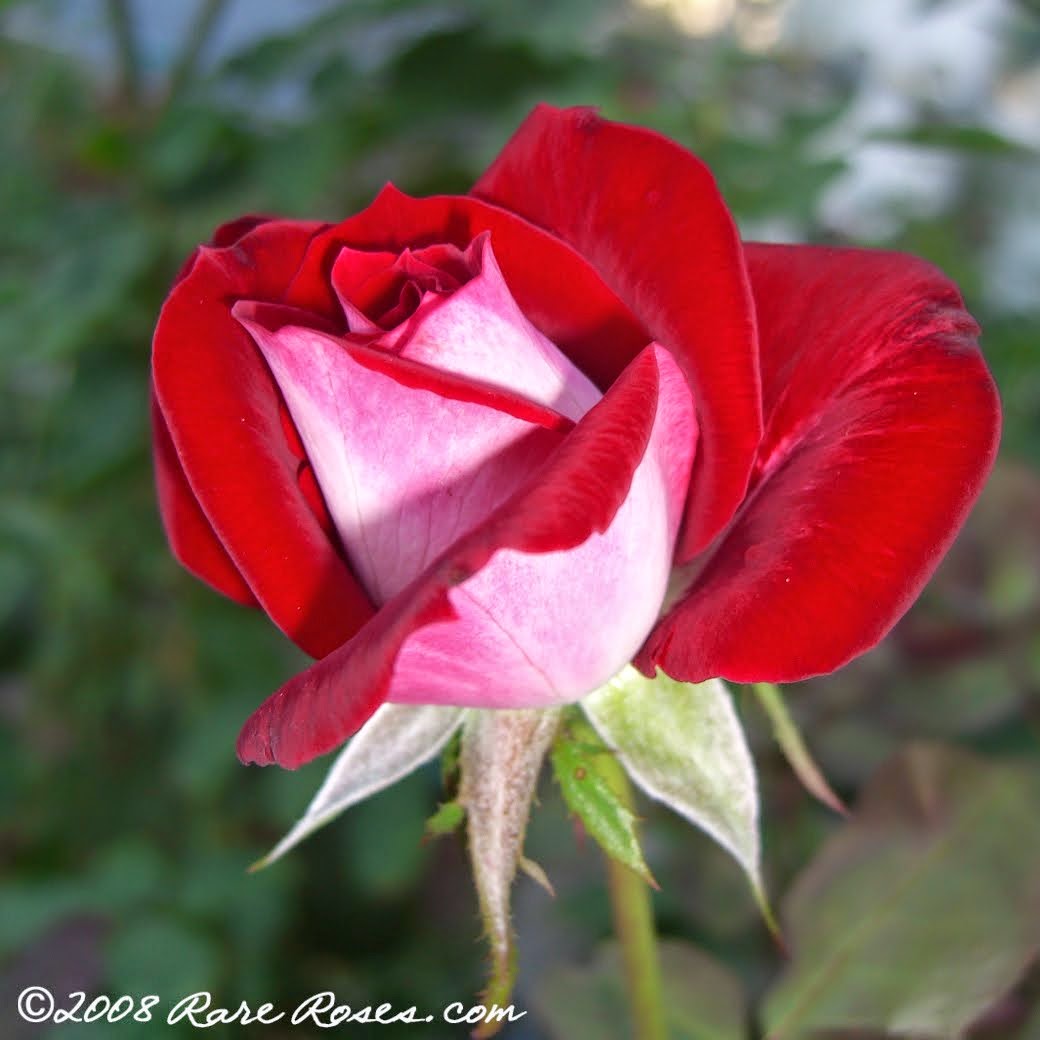
I had never seen a rose like this one.  Deep, velvety red on the inner part of each petal, almost pure white outside.  And unlike most roses of this shape, it, too, had a wonderful scent.  I did not see another like it for years.

We’ll always have Notre Dame…

Going there by myself, doing my research, staring in awe at the inside of La Sainte Chappelle, strolling through les Jardins des Tuileries, biting off a swear word as the hotel’s toaster hurled my toast through the air and onto the floor – all were the foundations of a wonderful trove of memories that I can savor as I write about Paris in my WIP that will (God willing!) come out in December.

It’s all worth celebrating.

So what are you celebrating?  (I’m looking forward to reading everyone else’s this evening…)

http://www.linkytools.com/basic_linky_include.aspx?id=179014

Small Celebrations, May 23, 2014


Welcome to Friday and the Small Celebrations blog hop, started by VikLit.  We all sit back, take stock (Fridays are good for that) and notice the little things that make our lives happy, that make us smile, or that give a moment’s joy.

The information on the hop is below.  Why don’t you join?  Or, at least, visit the various posts and smile.

Today I am celebrating two rather small things.  Aside from a soft, spring rain that is making the grass green (and, unfortunately, making it grow!)

Shining Brightly

The photo of the spring rain did not turn out well.  It looked rather like the view you get through your reading glasses after handling them with hands that just boned a roasted chicken (smeary, I mean).

So we are celebrating two other things.

This is a hydrangea of a particularly bright pink.  It is bright even on a rainy day.  I forgot I had it, since I don’t generally go in my own front door.  Imagine my surprise when I saw this beautiful plant glowing in early twilight:

…and doesn’t the pink go beautifully with the handmade pot? 

Once it is gone by,  I will be putting it in the ground by the front door.  With any luck (and some good feeding) it will bloom again next year.

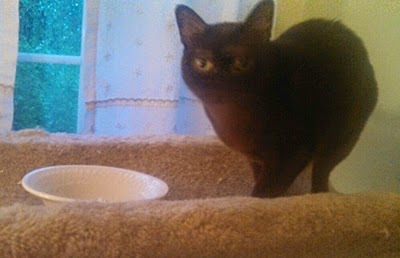
…And I am posting about a small celebration.  I’ve mentioned her before.  I think I called her an attractive nuisance.  She answers to ‘Princess’, though her name is ‘Frida’.  She is also referred to as ‘Little Miss Mess’.  And she is a very sweet illustration of a bit of poetry by Katherine Lee Bates:

Little Miss Mess, the Attractive Nuisance

Dawn love is silver
Wait for the west
Old love is gold love –
Old love is best


Frida celebrated her tenth birthday this month.  She is healthy, lively, in good flesh – but she is more than half the maximum age she is likely to reach.  (Burmese cats tend to be long-lived)  The time has passed so swiftly, and she is my best little girlfriend.

So what are you celebrating?

http://www.linkytools.com/basic_linky_include.aspx?id=179014

Finding The Write Path


Today I have the pleasure of participating in a Blogfest  hosted by Carrie Butler .  

Carrie had the idea of having us talk to the people we once were when we first started writing in earnest with the object of being published.  What did we learn?  What advice can we give?  What encouragement? 

Carrie has joined with her co-host, PKHrezo to compile those posts and put them out as a free e-book.  It’s a wonderful idea, and I’m delighted to be on the Blogfest.

 * * * * * * * * * * * * * * * * * * * * * * * * * * * * * * * * * * * * * * *
Dear Diana, 

So you’ve decided that you like to write and you like entertaining people with your writing.  Now you are getting ready to do what it takes to be published.  It’s pretty exciting, isn’t it?  I remember how it was.  And I remember, too, how slowly things happened, how much waiting there was.
 
There are a lot of lessons to learn, and experience does tend to be the best teacher, but let me give you a few pointers that will help smooth things: 

* Cultivate Humility / Drop Your Arrogance
You may have ability, talent and drive, but so do a whole lot of other people.  If you keep shouting about it, they will (choose one metaphor): pull out their earphones/ switch channels/ cut you dead/ dismiss you as a pain in the neck/ actively hate you.  

Years ago, just out of college, I sent around a manuscript.  I received a rejection note that said that the manuscript needed work.  I am embarrassed to say that I wrote back a long, angry letter saying that I didn’t need to improve the thing. (Did I say I was very young?)  I came to my senses not long after that.  I have never gone into a tirade with anyone.  (And I have never queried that agent – who was very nice to send me a detailed comment) 

* Don’t be Shy
Yes, I know I wrote the paragraphs above.  Odd as it sounds, while some writers seem to be arrogant, I think many of us have a fear that people will read our work and find it lacking.  Well, maybe someone will.  You have to deal with that.  But if you don’t ask for advice, for input, for guidance, you will never know how you are perceived, and you will never know how you can grow. 

* Don’t put all your basques in one exit – er, I mean – Don’t put all your EGGS in one BASKET. 
Ideas for other stories will occur to you: write them down.  Make some notes.  You will have something to fall back on when you finish your current, engrossing project.  Believe me, the sense of futility when you have nothing to turn your energy to can be crippling.  This helps avoid it. 

* Carry a notebook and jot your ideas. 
You will also end up jotting grocery lists, phone numbers, the name of that wonderful recipe someone made that you plan to look up.  That is all right.  The presence of a notebook where you put your jotting is crucial.  Otherwise you’ll be writing on napkins, on the back of dinner receipts, on brochures, and what you don’t end up throwing out unintentionally will be crumpled beyond retrieval and all your magnificent notions will be lost.  (The magnificence of a notion increases in direct proportion to your inability to locate and capture it, by the way.) 

*BACK UP YOUR WORK. 
Not in one single location.  Remember when your hard drive crashed?  If you hadn’t heeded that advice you would be in the soup now! 

*Do your research
This is a piece of advice that can be taken many ways.  If you’re writing about history, make sure it’s accurate, or else give reasons for any deviation from the facts.  In this case, though, I am talking about researching the steps you have to take to meet your goal, and the players along the way.  http://www.pred-ed.com is not a bad place to start.  I would never have had all my work sidelined by a dishonest agent if I had done that years ago.  To be honest, Pred-Ed did not exist, and I was not on the Internet, but I could have curbed my wishful thinking and taken the time to check things out. 

*Write a working Pitch, Synopsis and Blurb for each project. 
Seek advice on them.  As a story evolves, they will change, but you can’t publish without them, whether you self-publish or go the Traditional route.  It is an excellent idea, as well, to have a condensed pitch, 300 characters or less, to put in online submissions as well as a super-short twitter pitch that you can throw into the mix when there is a ‘Twitter Pitch Frenzy’.  Tweak them regularly. 

* Improve yourself:
You’re a good writer.  You know it, people you respect have been telling you so.  You can feel the talent you have, and you find nothing so satisfying as finishing a scene and knowing that it works.  I have some news for  you: if you do things right, you will be a far, far better writer in a few years than you are at this moment.  

I’m not saying you’re bad.  I’m saying that if you do things right, you will continue to improve.  Read other books.  Listen to people.  Keep notebooks.  Let yourself grow. 

I wish I had attended more workshops and conferences.  I’m doing that now.  No one is going to look at you and voice your secret fear: that you are a phony.  If you write, you’re a writer.  And you’ll gain confidence and comfort associating with other writers.  You will also get some fabulous ideas and tools.

*Roll with the punches
There are two or three bestselling, quality authors whose work I really don’t like.  It doesn’t mean they are bad: it means that they are not to my taste.  Apply that thought to yourself.   You are writing stories.  Some people will love your work and some will declare that they would rather have their teeth pulled than read anything you have written.  Even the nastiest expression of dislike can have a grain of helpfulness in it, if you look at them the right way. 

*Associate with other writers. 
You learn a lot by listening and paying attention. And  you can share what you know.  It’s rare that even the most green newbie doesn’t have something I haven’t thought of.  And other writers make great beta-readers.

*Contribute (or, ‘Give as well as take’)
If someone does you a favor, return the favor.  Do a beta-read.  Offer a line edit (just make sure you’re good at grammar and punctuation) or a character critique. 
 
*Appreciate your readers
*When you are contacted by a reader, take it as the compliment it is and respond promptly and pleasantly.  You wrote your stories for your readers.  They are your customers.  Never, ever, ever respond to a review, especially an unfavorable one.  

*Be accessible. 
If someone is interested in  your writing, that person is also interested in you.  An online presence is crucial.  And be selective about what you put there.    

*Stop viewing other writers as adversaries. 
As Hart Johnson said in an interview I posted, we are not in competition.  The more good stories are out there, the more people will read them and want more.  Sincere compliments are always a good idea.  And if someone says something nasty about you, ignore it. 

 
And the most important advice is this:

*Write. 
Just keep writing.  Even if you think it won’t go anywhere, write.  Edit your work, jot ideas, fiddle with plans if you like – but at least once a day write something.  It is odd how putting forth effort actually strengthens you.  I learned this after a years-long dry spell.  It was wonderful when the log jam broke.  The dry years were very hard.

Those are my thoughts.  I hope they help you.  

Much love and a smile,

Diana
www.dianawilderauthor.com

* * * * * * * * * * * * * * * * *

“I give permission for my entry to be included in the e-book compilation without royalties and/or separate compensation.” 

Small Celebrations, May 16, 2014


It’s Friday again, and we’re stopping, taking stock of things and celebrating the small, things that you don’t think merit an entire bottle of Champagne...  Until you get started thinking.

So, today.

I’m looking out the window and seeing that my next door neighbor mowed her lawn.  That is a good thing.  She does it regularly, right down the rather steep hill to my lawn.  What’s worth celebrating about this?

Well…  Dare I confess it to the world this Friday morning?  The fact that she was mowing down the side of the hill is a triumph worth celebrating.  I think it was celebrated with some champagne, now that I remember it.

Neighbors: mine are nice, most of them.  In this case, however, the neighbors there got it into their heads that the side of the hill to their house was ours.  I guess they did not read the specs of the property.  With that supposition, they did a number of things.

1.  They talked ‘at’ me about how the large oak just up the hill from the hill needed some work.

2.  When a windstorm blew branches of the oak down, their landscapers piled the branches on my fence and broke it.

3.  They stopped mowing the hill and let it get terrifically weedy.

All of this was without directly saying to me that the hill and tree and whatever else were on my property.  It was, in fact, a textbook illustration of passive aggression.


I mulled over the best way to approach things. I don’t like conflict.  Smiles make me happy.  …and then a survey team appeared on the property.  And they politely asked me if I minded if they went on my property.  I did not.

And now that hillside has been mowed.  It took a lot of effort on a hot day, t’other day.

They still haven’t come to me to say who owns that tree that is right-smack-over-the-property-line-by-a-good-twenty-feet.

I’ll mow my lawn tonight when I bring home my new mower, another thing to celebrate.

…and if they actually ask me, I’ll suggest we chip in together to get the tree dealt with.

OH! – and I’ll be reading everyone else’s posts, too.  Thank you, VikLit!


Imagination Making a Picture Come True…


For some of us, stories start with a picture.  I remember having an image in my mind of a group of people camped by a great river, in the shadow of a ruined city.  They were waiting for ships to arrive with supplies.  The reason for their presence there, and the mystery behind the ruined city, are the puzzle-pieces that grew into the first volume of my series, The Memphis Cycle.   

Another story began with a man standing on a hillside overlooking Paris.  A battle is being fought, though the sporadic firing below him shows that the fighting is paused for the  night.  The man looks up through the drifting skeins of smoke, up toward the stars that mirror the lights of the city below him.  In that moment he falls in love – and my stories set in Paris grew from that image.

I design my own covers, so I know how it is to have an image in my mind that expresses the story, and the sort of struggle that comes when I try to capture that image and that story.  Sometimes I succeed.

But what sort of image do you get when your read a description of a story?  If, say, you read this passage:

Valentine’s Day means one thing at Stanton Middle School: students will send each other chocolate roses. Each year, Mia Hartley watches while the same group of students gets roses and everyone else is left out. This year, she decides things will be different. As the student assigned to write names on the cards, Mia purchases 25 roses and writes her own cards, designating them to 25 people she’s personally chosen. But she soon learns that playing matchmaker is much more complicated than she thought it would be.

Is it possible to compose an image that is as whimsical, amusing, charming and (I suspect) touching as this story promises to be?

I think it is  quite possible, and I think you may agree.  This week, you see, Stephanie Faris, the author of 30 Days of No Gossip, has revealed the cover of her new book, due out next year. 
Click  Cover Reveal and see what you think…

…And prepare to be amused,  to smile and, maybe, be charmed.  (I suspect the book will be even better…)

Here’s her website, too…  http://www.stephaniefaris.com/

Finger-Pointing – A Pet Peeve


I was wandering through an online bookstore recently.  It’s a good way to while away the time or, in my case, fritter it away.  I think bookstores are actually wormholes, if you’re a Trekkie or a sci-fi addict.  You go into one of them as young as Rip Van Winkle at the beginning of the story, and you emerge to discover that hours, at least, have passed.  I don’t mind.  I love sifting through books, finding associations, looking at recommendations –

If you like this…you’re sure to like THIS…


Generally I find THAT interesting, at the very least.  This afternoon I was looking up an author who had written a book in an era that interested me (and that I have not used as a setting for anything I’ve written).  The title of one book of this author caught my attention, and I clicked on it, found other books by the same author, read the author’s profile, and thought, Hmmm…  


There were quite a few books, and the writer’s credentials were excellent.  I was mulling over buying one or another of the writer’s works, just as an intro, with the possibility that I had found a new favorite.


…And then I saw that this writer had published a sourcebook on a subject that I found very enjoyable.  It was geared toward writers with a specific focus.  Some hints on what to do and what not to to, and a compendium of facts that would be useful.  


I was sold.  I was, as they say, there.  This was a book that I would find very handy, and I decided I wanted it in paperback rather than electronically, because I could flip through it, mark it up, dog-ear it and put tabs in it.  A lot of the information in there was familiar to me, but some of it was confirmation of what I had wondered about.  The writing style was good, too.


.  .  . But then, as I got into the text itself, I began to see how this author made points.

“In her book ‘Mary’s Little Lamb’, Julie Jones has obviously done absolutely no research into sheep-culture because she has her sheep’s fleeces smelling of ambergris rather than bacon grease, and any moron who knows how to research will know that sheep hang out with pigs and so would smell of bacon grease.  In fact, in Jones’ book I find so many errors, I used up a pink highlighter underlining them all!  Research is Crucial!”

Well, yes, I thought.  I looked further.  Maybe this was a one-timer.

Not quite.  Every time the writer made a point, an example of the wretchedness of error was given – and the writer’s name and that of the book were given.  The tone was scornful, belittling and gloating.

Those examples might have been appropriate for a review.  This book was a sourcebook, not a review or a survey.  The writers that the author was putting in the pillory were storytellers who were not pretending to be scholars or experts.  They simply had some (rather bad) mistakes in their books that could have been avoided with some research such as that provided by the author.

Years ago I read the private journal of the Roman Emperor Marcus Aurelius.  The title has been translated to ‘Meditations’, but I don’t think it is accurate.  They were his writings to himself, a sort of journal.  The translator remarked on one feature that confirmed, to him, the essential kindness of Marcus Aurelius: when someone is mentioned as having done something excellent, his or her name is given. But if Marcus is speaking of wrongdoing, vice or stupidity, the person remains nameless.  I went back through the book and checked: the translator was correct.

Marcus had the right of it: he was a great man and a good one.  

But the writer of the sourcebook – 


Well, it wasn’t a sourcebook.  The scornful rants made it something less.  The writer, who wrote books that required the sort of research featured in his or her book, was belittling the competition.  And that, in my book, is gauche at best.

I put it back on the shelf, figuratively, by backing out of the page, deleting my browsing history and going elsewhere.  I don’t need to promote backbiting.


Pity.  The (non-sourcebook) books looked interesting, too…