Graphics Work


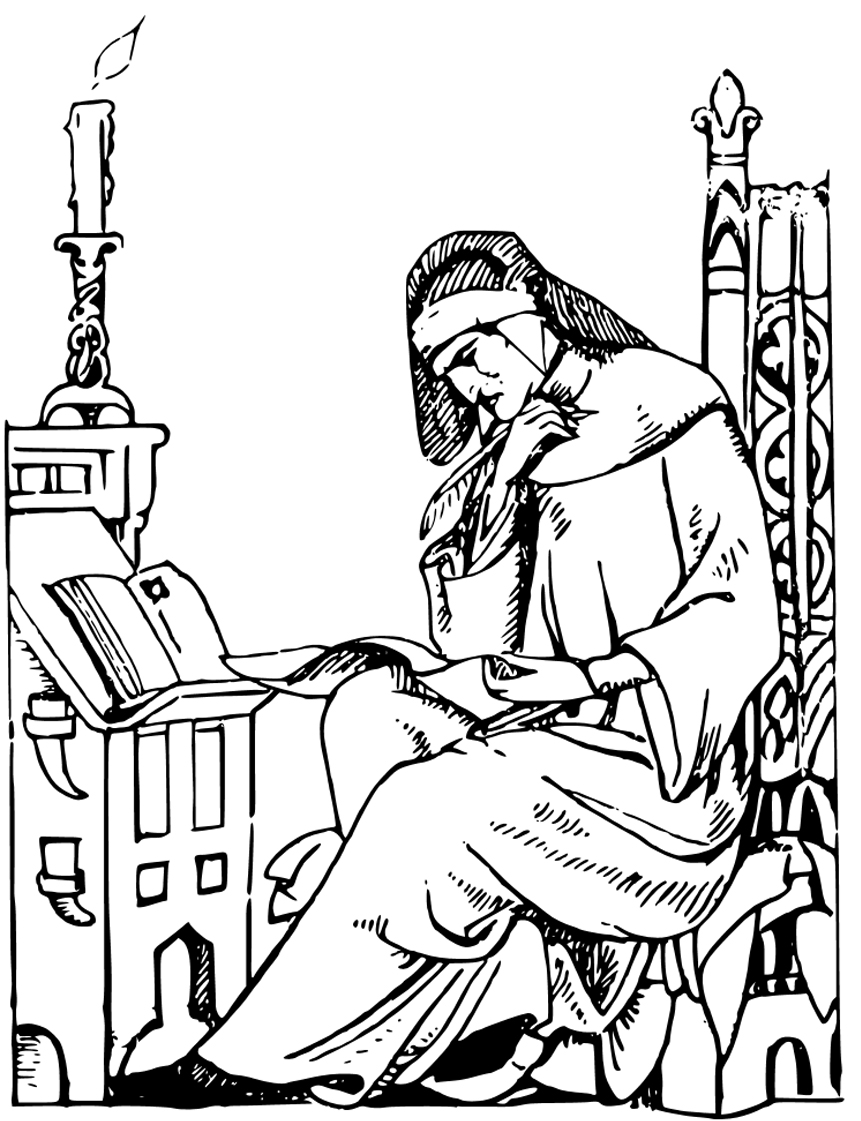
I do graphics in a small way.  I’ve always enjoyed designing  things… the play of color.  Unfortunately, I have the enjoyment and a bit of a knack, but to actually invent something is a bit beyond me.  So I play with images and arrangements and color.

This image represents eight hours of work.  It was a challenge in view of the sheer amount of images involved in making it up and the difficulty inherent in putting them together in a harmonious whole, but I’m pleased.  (or…perhaps it’s just that I’m tired).

Interview With Laurie’s Paranormal Thoughts


Laurie Jenkins has a book review blog that is beautifully set up and well run (click on the image go to to it):

She handles regular and paranormal books, and today (July 5, 2012) I was privileged to be a featured author with A Killing Among the Dead – classified as paranormal because it contains a ghost. 

Here is the link to her page:
http://lauriethoughts-reviews.blogspot.com/2012/07/killing-among-dead-by-diana-wilder.html

Dealing with Laurie was a wonderful, fun experience; her blog is entertaining, engaging and interesting!

Thank you, Laurie for letting me be a part of it!

Using Visuals When Writing


One of the things I really need when I’m working on a story is something that I can actually look at, that will give me an idea of how something looks, works, is sized.  Several series of books are chock-full of photos and explanations, and they are invaluable.
The Shire Egyptology series is a good example.  It is published in the UK and each book covers a subject – food and drink, household pets, medicine, textiles, weapons and warfare, Akhenaten’s Egypt…  They are not written by the same person.  The photographs and explanations are especially useful.
Their website is here
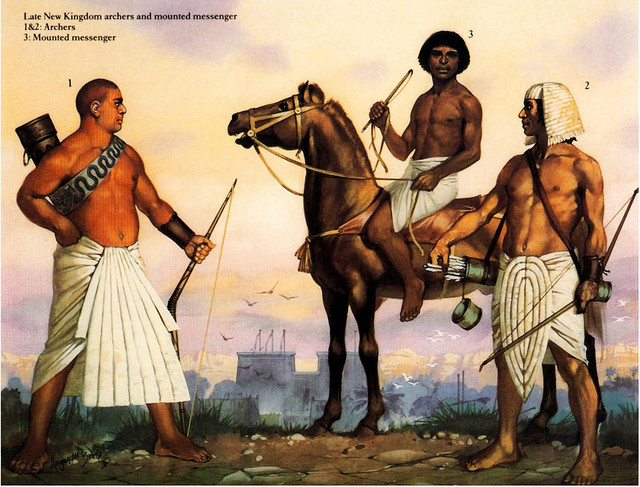
Ancient Military history is covered by the Men At Arms series published  by Osprey (here is a sample of one of their books on New Kingdom Egyptian military). 
I have similar sources for other books; one series set in 1830’s Paris was helped immensely by a book of old photographs.
 
Time-Life books put out Echoes of Glory in two volumes.  This is one of the most useful books I have ever encountered.  It is separated into sections covering edged weapons, firearms, soldiers’ life, the home front.  Modern photographs of arms and equipment are paired with period depictions.  It has been invaluable to me, being, as I am, rather visually oriented.
In Mourningtide, I write of the effect of the death of a son and brother on his family.  One of the characters is Ramesses, the younger brother of the man who died.   He became the pharaoh Ramesses II, one of the great rulers of his age.  I have seen his statues and photographs of his reliefs, but finding anything that has him pictured as a living person in the flesh is difficult.  Fortunately, I have succeeded.
Here he is, Ramesses himself, as depicted by Yul Brynner in the movie The Ten Commandments.  He is not a prince in this photo – the golden headband with cobra and vulture tends to indicate that he has succeeded his father.  I find it a very enlightening photograph, something that I will have to refer to over and over, I think. 
One more item for my toolbox…

How on Earth Do You Write – Some Observations


Snippets from discussions on process and necessities in writing:
I seldom visualize the beginning of a novel. Usually I have an idea for a happening or series of happenings upon which the novel is based. Writing their progression almost always leads to clarification of their point of origin (as to the story flow..)
cough! cough! Gosh, I’m sorry. That was a horrible bit of talking.
What I mean is that the flow of the story helps to clarify things that have caused its course.

An example: I’m working on a story right now involving the death of a young man and its effect on his family, including a younger brother and his father, who receives the word late. My first image of the story was the young man’s death and his father’s initial reaction. As I filled that in, I was able to picture how the fellow ended up in the position in which he was killed.

Ultimately, I realized that the best way to start the story was to show the father taking leave of his sons, with some instructions to the older one. The older son (who dies) has shown uneasiness with his situation, which ultimately leads to his death. It works, but my first image was of the father’s initial, anguished reaction.

Another story involves a colossal statue crashing down into the middle of a festival throng. The mystery progresses from there. In that case, that scene is chapter 1 – but there is a prologue set several decades before the provides clues to the mystery. 

Must Do’s

From what I’m reading, we all have some sort of ‘routine’, however loose, and some sort of absolutely must do’s, no matter how loose they seem.

It’s delicious when an idea catches hold and the words come flowing out faster than your fingers can move. But why, oh why, does this happen when you’re going hammer and tongs with something that absolutely must be finished within a certain time frame?

You give a shout of joy and then start swearing. Or, I do.
My ‘Absolute Must’ is that I must somehow, in some retrievable way, capture the idea, the snippet of speech, the scene setting, the plot twist. Thinking ‘I’ll remember this, certainly!’ doesn’t work. I speed-jotted a scene that I was delighted with in the manuscript that I am finishing up. Delighted – and I tried to tell a friend just what happened in the scene.  Here’s what I said…

He goes on to patrol the upper path, and she goes with him because she believes he needs the company after the extreme danger and stress of the morning.
He says… Well, he tells her… Um. He apologizes. She says he doesn’t have to. No, wait! I forgot! She insists on going with him because she is a soldier’s widow and knows about how things work.

Gah! I’m telling it wrong.

Anyhow, he tries to apologize and her heart turns over. I think that’s how I phrased it…
What did he apologize for? Why, for being emotional a couple days before. You mean you couldn’t figure that out? What the heck?
Well, anyhow it was a great scene and I captured it before I forgot it. What do you mean I’ve forgotten it? I have it written down! ‘Mind like a sieve???’ Now just a minute! OK, OK, I’ll let you read the scene once I print it.

Sheesh!”

Refreshment for the Soul


Someone sent me a link to this presentation some years ago.  It is a virtual tour of a Chinese landscape scroll ‘Along The River During the Ching-Ming Festival’.  This is a theme and depiction that is considered a classic, and the Imperial Palace Museum has at least six similar scrolls.

This one has been digitized (if that’s a word) and the link will take you to a panorama of the scroll.

Move your mouse to the left and the scroll will unroll before you.  You can control the speed.  From time to time you will encounter an area enclosed by a square.  If you click on it, the scene will open into a three-dimensional, animated vignette.  It is very cleverly done, and too beautiful not to share.

Here is the link:

Along the River during the Ching-Ming Festival

…and here is a snapshot from the scroll:

In with the new…


I have at least two projects underway in any given time.  This has several benefits:

  1. It helps to minimize the strange sense of grieving I suffer from when I’ve finished a story and am no longer dealing with a group of characters that I have come to love.  I remember I received this advice years ago from an editor.  “Never have only one work in the pipeline,” she told me.  “It’ll help you cope with finishing a work.”  I learned the hard way that she was right. 
  2. It helps to minimize writer’s block.  I think it’s sometimes the result of working too intensively on a specific project to the exclusion of everything else.  It is an excellent way to burn out.  Switch off to something fresh and you can catch your breath, and regain your stride.
  3. It will give you an excuse not to work on something.  Actually, this isn’t a benefit.


At the moment I’m finishing the first draft of Mourningtide.  I’m also working on Crowfut Gap, a novel set in Civil War Virginia, near the West Virginia border.  There’s another Egyptian story, The Jubilee, which I started a few years back.  It’s moving along slowly as things occur to me and I jot them down.

Lately I have been going back to a period that is slightly after A Killing Among the Dead.  Ranefer is the last of his line, a family decimated by a systemic ailment that has killed them one after another, leaving only him, the third son of a king, the brother of two kings and the uncle of another.  Egypt is crumbling; What is to be done if you are Lord of the Two Lands, and The Two Lands has forgotten that it has a Lord?

It is a bittersweet story (in its current shape) and puts an unusual twist on history as we know it.

The twist came to me as I was driving the three hundred odd miles home from Upstate New York.   I think it may work.  It might help if I stopped blogging and typed it, but I can mull it over a little more…

Only 6,800 words currently, but it should grow nicely – once I really start working on it.

City of Refuge – Title page done


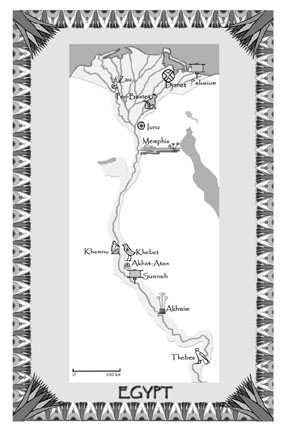
This book had a cover redesign, and I took the occasion to insert a map and expand the Afterword.  The book will be the subject of a Goodreads giveaway mid-month.  Meanwhile, I redid the title page:
 
That involved a fair amount of work.  I also put in images in the prologue, the first chapter and the Afterword.  Final proofing is underway.
 
Here is the cover


So, What’s With the Ladies Without Heads???


Or, alternatively, When Can We Expect This Silly Cover Trend to End?
The realm of historical novels is being inundated by headless women. Why this should be is something I can’t say, but there it is. I have been looking for historical novels and the trend at the moment is to get a model wearing a period dress and only show her from the neck down.
I am hard put to understand this trend, unless perhaps some cover designer had the bright idea of doing this with a photograph in order to get around the fact that, aside from a Merchant Ivory movie (and sometimes not even then) a modern person photographed in period dress doesn’t work.


Actually, being a writer of historical novels and a nit-picker myself, I could remark on Cicely, Duchess of York (‘Queen by Right’) holding an un-tethered hawk on a lightly gloved hand while bearing a basket of flowers in the other.  Did the hawk  help her pick flowers?  I can’t imagine that he was at all cuddlesome or companionable, especially considering that his pose shows that he is most likely stuffed.  Also, the lady would be wearing a headdress composed of a stiff frame to the face and then a headcloth falling behind.  High-ranking ladies in a public setting did not uncover their hair, as this photo shows.


Catherine De’ Medici (‘The Confessions of Catherine de Medici’) is shown in a garment that would have been several decades out of date, worn around the time of Henry VIII.  Catherine was a contemporary of Elizabeth 1.


I am not as conversant with costumes from the time of Eleanor of Aquitaine, but I will say that the unbound hair looks wrong (‘The Scarlet Lion’).  It would have been braided or otherwise confined or covered.


But wait! The problem appears to have originated in Ptolemaic times and then spread to Rome, based on other covers I’ve seen.  And–Is Selene wearing a toga???  It certainly looks like it.


The other problem with all of these covers, aside from the one about James II’s mistress, is that the facial features – what you can see of them – are wrong.  In the centuries since these people lived, we have seen a blending of the breeds (meaning Celts, Angles, Norman, Tuscan, Palatine).  Bone structure is different.  I remember reading an article, once, by a forensic anthropologist who was discussing how he could tell if a skull came from the Civil War era.  He said that people in the 1860’s in the US were generally more hatchet-faced, with sharper bridges to their noses and generally longer faces,  The influx of late Victorian immigrants brought higher cheekbones and wider faces. 

Let us be reasonable, here.  These are covers for books and are meant to draw attention to the book and, perhaps, draw people in.  The first one I saw was somewhat interesting; they got the costume right.  But this parade of headless ladies has gone beyond interesting and into the banal: they look utterly silly.